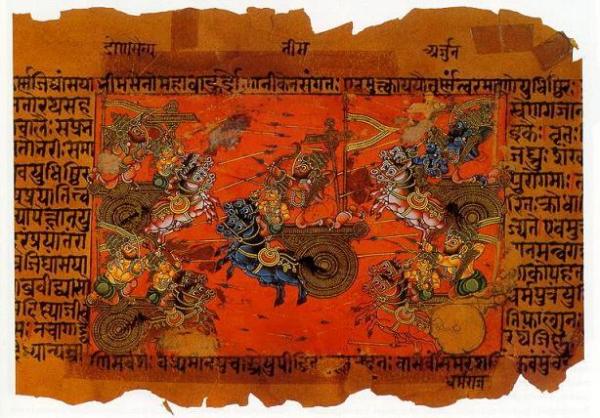
Between the Black and Caspian Seas, a group of nomadic Iranian warriors, dominated the Eurasian steppe from roughly 900 BCE to 200 CE. The Scythians were renowned for their cavalry skills. Their mobile society excelled in horseback archery, rapid raids, and strategic warfare that allowed them to control vast territories far beyond their settlements. They influenced both... Continue Reading →
The Olmecs: Mesoamerica’s Mother Culture
Often called the “mother culture” of Mesoamerica, the Olmecs (c. 1500–400 BCE) laid the groundwork for later civilizations like the Maya and Aztec. They are best known for their monumental stone heads, carved from basalt and weighing several tons, which may have represented rulers or deities. The Olmecs also built pyramids and ceremonial centers and... Continue Reading →
Hittites: The Forgotten Civilization That Shaped the Ancient Near East
The Hittites were an ancient civilization that thrived in modern-day Turkey and northern Syria from roughly 1600 to 1200 BCE. They were one of the first to forge iron tools and weapons. Along with Egypt, they created the world's first known peace treaty. Their law codes were ahead of their time, yet despite this, very... Continue Reading →
Nok: The Pioneers of Iron and Terracotta Art in West Africa
When students study world history, sub-Saharan Africa is often overlooked, yet civilizations like the Nok culture demonstrate early technological and artistic brilliance. Flourishing in what is now central Nigeria from around 1000 BCE to 300 CE, the Nok people were among the first in West Africa to master iron smelting and produce intricate terracotta sculptures. They set the stage for... Continue Reading →
Mitanni: The Forgotten Power That Balanced Egypt and the Hittites
A Counterbalance When students learn about the ancient Near East, the spotlight usually falls on Egypt, the Hittite Empire, or Assyria. Yet in the middle of these giants stood Mitanni, a powerful Hurrian-speaking kingdom that acted as a crucial diplomatic and military counterbalance. Centered in northern Mesopotamia, Mitanni was not just a minor state caught... Continue Reading →
Elam: The Forgotten Civilization That Shaped Ancient Iran and Mesopotamia
Laying the Foundation When we think of ancient history, Mesopotamia and Egypt often dominate the conversation, but tucked into southwestern Iran, the Elamite civilization quietly thrived for over two millennia. From early urban centers to innovative bureaucracies and writing systems, Elam played a pivotal role in shaping Mesopotamian culture and laying the foundations for later... Continue Reading →
Oddly Far: Countries With Territories Nowhere Near Them
Some countries aren’t limited to their main borders. They control far-flung overseas territories or odd territories thousands of miles away. These lands often have fascinating histories, unusual governments, and quirky features that surprise even geography buffs. From a tiny rock at the tip of Spain to a French region in South America and a U.S.... Continue Reading →
When Borders Get Weird: Corky Political Boundaries and the History Behind Them
Political Borders: More Than Lines on a Map Political boundaries are often taught as fixed, logical lines on a map, but history tells a much messier story. Many of the world’s strangest borders exist because of colonial negotiations, imperial rivalries, and historical compromises that prioritized power over geography. For social studies teachers, “corky” political boundaries... Continue Reading →
Scottish Gaelic and Ainu: Stories of Survival Against Suppression
Survival Against Suppression When a language has only a handful of speakers left, it can feel as though its story is already over. Yet the cases of Scottish Gaelic and Ainu prove that survival is possible even under intense historical pressure. Both languages endured centuries of active suppression. These histories provide rich material for classroom... Continue Reading →
Welsh and Irish: Lessons in Language Preservation
Language Revival: More Than Words When a language is labeled “endangered,” many people assume its story is already over. In reality, decline does not always mean disappearance. With deliberate schooling, grassroots activism, and government backing, some languages have managed to regain real ground and come back to life, so to speak. Welsh and Irish are... Continue Reading →