
Between the Black and Caspian Seas, a group of nomadic Iranian warriors, dominated the Eurasian steppe from roughly 900 BCE to 200 CE. The Scythians were renowned for their cavalry skills. Their mobile society excelled in horseback archery, rapid raids, and strategic warfare that allowed them to control vast territories far beyond their settlements.
They influenced both Chinese and Greco-Roman civilizations. In China, their horseback archery shaped the Warring States and early Han Dynasty military tactics and frontier diplomacy. In the Greco-Roman world, they affected cavalry strategies, Black Sea trade, and artistic motifs, leaving a lasting legacy beyond the steppe. They influenced the Persian Empires (especially the Achaemenids, 6th–4th century BCE) by inspiring cavalry tactics, mobile warfare strategies, and frontier defense methods that the Persians adopted to control their northern territories
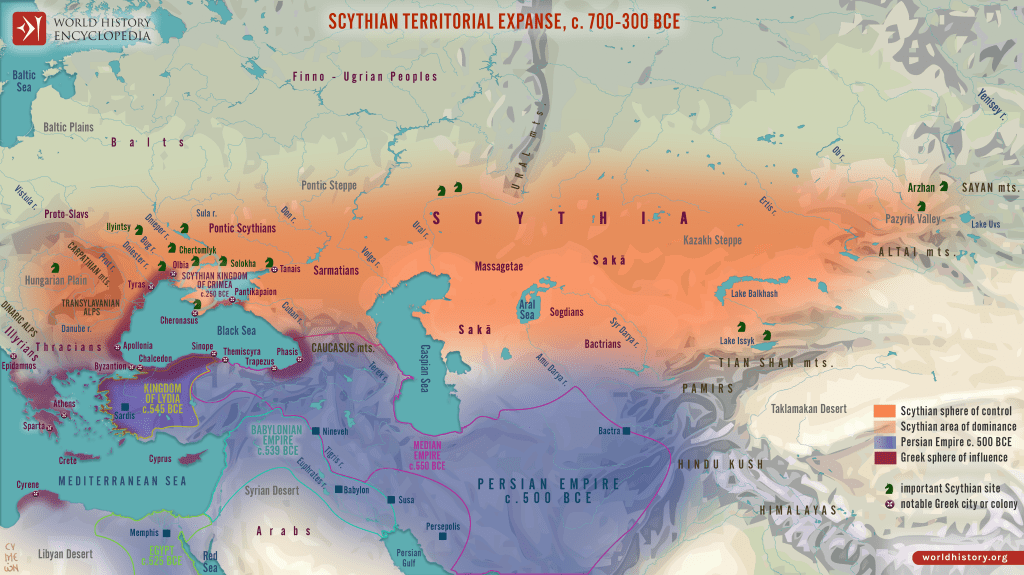
Understanding these nomadic cultures gives students a broader view of ancient Eurasia. Their innovations in military tactics, horse breeding, and metalwork influenced both Persian armies to the south and later European cavalry traditions, showing how mobile societies could shape larger empires.
Free Resource
Grab your free Scythian primary source activity!
Cultural Exchange Across the Steppe
Just because they were nomadic didn’t mean they weren’t also active participants in trade and cultural exchange. Their movement across the steppe spread artistic styles, weapon technologies, and cultural practices. Ornate goldwork, decorated horse gear, and ritual artifacts found in burial mounds (kurgans) reveal a sophisticated artistic and spiritual life.

In the classroom, you can have students compare Scythian horse archery to Persian or Greek military tactics. Map activities tracing Scythian migrations or trade networks. This can help students see how geography influenced their culture and interactions with other civilizations, as well as see just how vast the Eurasian steppe is.
Art, Burial Practices, and Daily Life
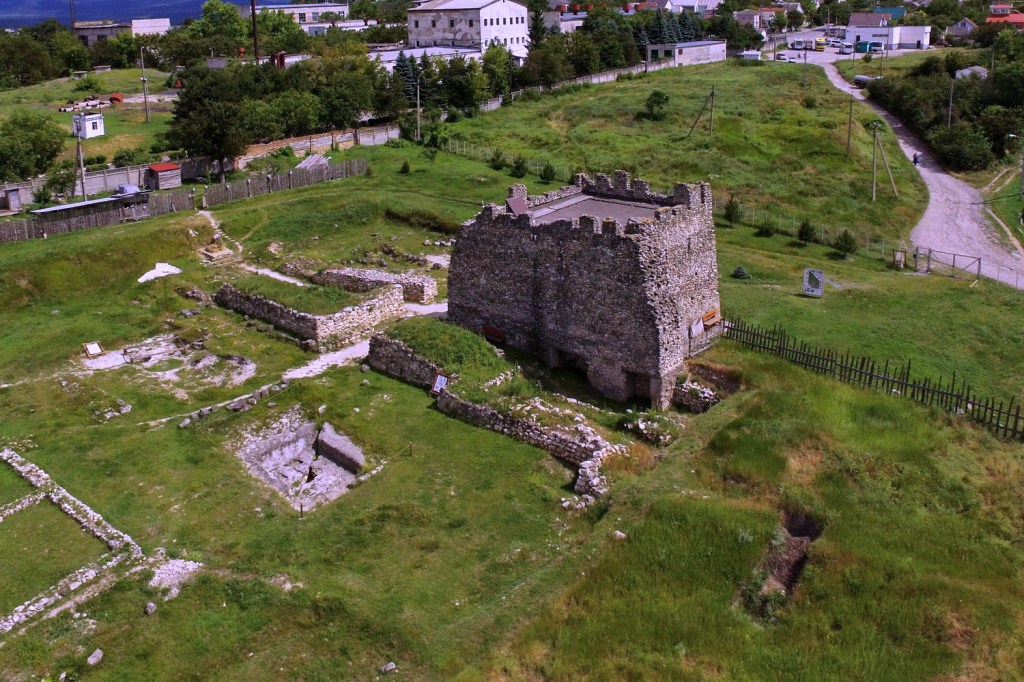
Scythian burial mounds, or kurgans, contain grave goods that include weapons, jewelry, and sometimes sacrificed animals or humans, reflecting beliefs about the afterlife and social hierarchy. These sites provide students with opportunities to explore how archaeologists interpret material culture to understand nomadic societies that left few written records. This is crucial for students to understand as much of what they learn about even their own history comes from written form. Humans leave behind far more clues as to how they lived and we can help them better understand that.
Legacy and Influence
Although often overshadowed by sedentary empires, nomadic Iranian warriors profoundly influenced the military strategies and cultural practices of neighboring civilizations. Their cavalry techniques, mobility, and artistic traditions shaped the evolution of warfare in both Europe and Persia, and their story highlights the dynamic exchanges between nomadic and settled peoples. Here are a few examples:
Military
- Hit-and-run strategies forced settled empires to develop more flexible armies and better logistics.
- The composite bow was stronger, smaller, and more durable, which made it easier to use on horseback.
Artistic Motifs
- Animal style motifs in nomadic art shaped decorative traditions in Persian metalwork and textiles.
- Geometric designs and repeating patterns from nomadic craftsmanship influenced textiles and decorative arts in places like Susa, appearing in carpets and wall decorations.
- Metalwork such as ornate torques, plaques, and weapon embellishments spread stylistic ideas that later appeared in Persian luxury goods.
Administrative Ideas
- Empires borrowed systems that allowed local regions to keep customs while paying taxes and providing soldiers.
- Mobile societies and steppe interactions shaped imperial strategies by emphasizing alliances, communication, and rapid administrative networks to manage large territories.

The Schytians gradually declined due to pressure from other nomadic groups, internal divisions, and shifting trade routes. Many were absorbed by Iranian-speaking Sarmatians, Alans, and early Slavic or Turkic peoples. While no group today is purely Scythian, their genetic, cultural, and artistic influence persists in Eastern Europe and Central Asia. Social studies teachers can use this to show the mosaic of cultures that have created our modern world.

Why These Warriors Matter in Social Studies
Studying Scythians and other steppe nomads encourages students to look beyond city-states and empires to understand the role of mobile societies in shaping history. It also demonstrates how technology, trade, and cultural exchange can transcend borders. Their genetic and cultural legacy offers a broader perspective on world history. What teacher doesn’t want his or her students to gain a better perspective about the past and the connections to the present?
Recommended Reading
The Scythians: Nomadic Warriors of the Steppe — Ancient History Encyclopedia
Education About Asia – “The Nomads of the Steppe: Resources for Teachers” — A curated teaching guide that discusses how nomadic pastoralists shaped nearby settled civilizations and includes links to classroom resource
Ryan Wagoner
The Lyceum of History
“I am indebted to my father for living, but to my teacher for living well.” — Alexander the Great
Follow me on: Blog | TpT | YouTube | X | Instagram | Facebook



Leave a Reply