A Counterbalance
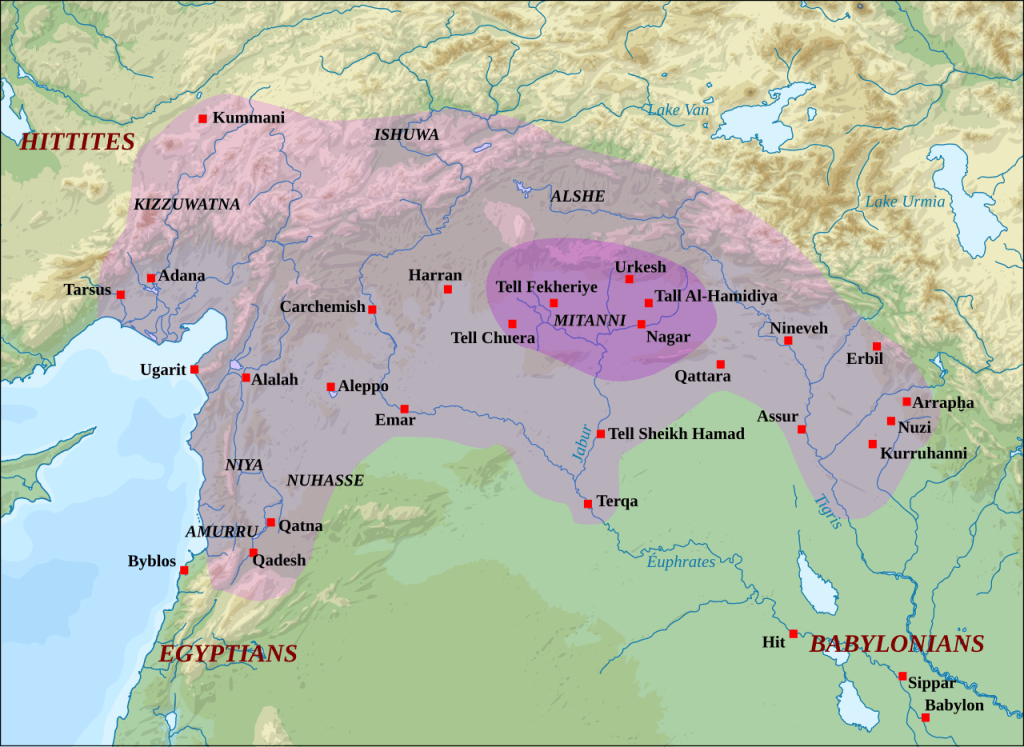
When students learn about the ancient Near East, the spotlight usually falls on Egypt, the Hittite Empire, or Assyria. Yet in the middle of these giants stood Mitanni, a powerful Hurrian-speaking kingdom that acted as a crucial diplomatic and military counterbalance. Centered in northern Mesopotamia, Mitanni was not just a minor state caught between empires. For centuries, it shaped regional politics, warfare, and culture in ways that deeply influenced its more famous neighbors.
Why Mitanni Is Often Overlooked
Mitanni’s importance is often overlooked because it left fewer monumental remains and because much of what we know comes from Egyptian and Hittite sources. Unlike Egypt’s temples or the Hittites’ rock reliefs, Mitanni’s legacy survives mainly through diplomatic letters, treaties, and references in foreign archives. By the 14th century BCE, growing pressure from the Hittites and Assyrians weakened the kingdom, and Mitanni eventually disappeared as an independent political power. Still, its influence lived on through military practices, diplomatic traditions, and cultural exchanges that continued to shape the ancient Near East.
Mitanni as a Diplomatic Middle Power
Mitanni rulers skillfully used alliances, royal marriages, and treaties to maintain their position. A clear example comes from the Amarna Letters, where Mitanni kings exchanged gifts and correspondence with Egyptian pharaohs, referring to each other as “brothers.” These diplomatic relationships helped stabilize the region and demonstrate that power in the ancient world was not just about armies, but about negotiation and trust. It served as what we might call a buffer region today. For teachers, Mitanni is an excellent case study in balance-of-power politics, showing students that ancient states used strategies similar to those seen in modern international relations.

Chariot Warfare and Military Influence
One of Mitanni’s most lasting contributions was its role in chariot warfare. Mitanni elites were renowned horse trainers, and their military strength rested heavily on fast, mobile chariot forces. The famous Kikkuli text, a Hittite horse-training manual written by a Mitanni expert, reveals how advanced their knowledge of horse breeding and training was. These techniques spread throughout the Near East, influencing Egyptian and Hittite military practices and reshaping Bronze Age warfare. This makes Mitanni a perfect example of how technological and tactical innovation can matter as much as territorial expansion.
Indo-Aryan Cultural Elements in the Near East
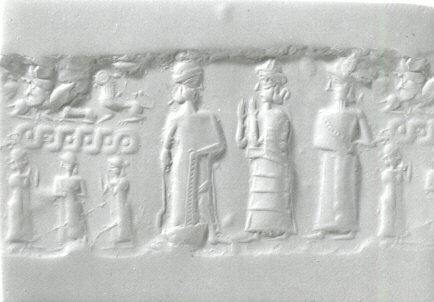
One of the most fascinating aspects of Mitanni is the presence of Indo-Aryan elements within its ruling elite. While the population largely spoke Hurrian, Mitanni treaties and texts include Indo-Aryan names and references to gods such as Mitra, Varuna, Indra, and Nasatya. These elements suggest early cultural exchanges between the Near East and Indo-European-speaking peoples, long before classical civilizations emerged in India or Europe. For students, this challenges the idea that ancient civilizations developed in isolation and highlights how ideas, languages, and beliefs traveled across vast distances. It also shows how the gods and goddesses of other civilizations can be reinterpreted in a new culture.
Why Mitanni Matters in the Classroom
Mitanni offers teachers a powerful example of historical significance versus historical visibility. Despite lacking famous monuments, Mitanni shaped diplomacy, warfare, and cultural exchange during one of the most dynamic periods of ancient history. A classroom activity could involve students mapping Egypt, Mitanni, and the Hittite Empire, then analyzing how Mitanni’s location forced it to rely on alliances and innovation rather than sheer size. It can also be a tie into modern nations that fill that same role. For example, Switzerland has historically maintained independence through diplomacy, neutrality, and alliances, much like Mitanni did between Egypt and the Hittites.
The Legacy of Mitanni
By studying Mitanni, students learn that history is not just written by the biggest empires. It is also shaped by strategic middle powers whose influence can ripple far beyond their borders. Integrating Mitanni into your lessons helps students see the ancient world as an interconnected system, where even “forgotten” kingdoms played essential roles in shaping the course of history.
Recommended Reading
Mitanni — World History Encyclopedia — A well-written summary of the Mitanni kingdom’s history, culture, and significance — great for background reading or student research
Mitanni — Encyclopedia Britannica — A concise summary of the geography and history of the Mitanni.
Ryan Wagoner
The Lyceum of History
“I am indebted to my father for living, but to my teacher for living well.” — Alexander the Great
Follow me on: Blog | TpT | YouTube | X | Instagram | Facebook



Leave a Reply