Lycians: An Influential Ancient Civilization of Southwestern Anatolia
The Lycians were an ancient civilization that lived in southwestern Anatolia (modern Turkey) from about the 15th century BCE until 546 BCE. While they are often overshadowed by the Greeks and Romans in history textbooks, the Lycians played a key role in shaping Mediterranean trade networks, political organization, and urban design. Their ideas and practices influenced later civilizations and make Lycia an important topic in social studies instruction.
Geography, Trade, and Mediterranean Connections
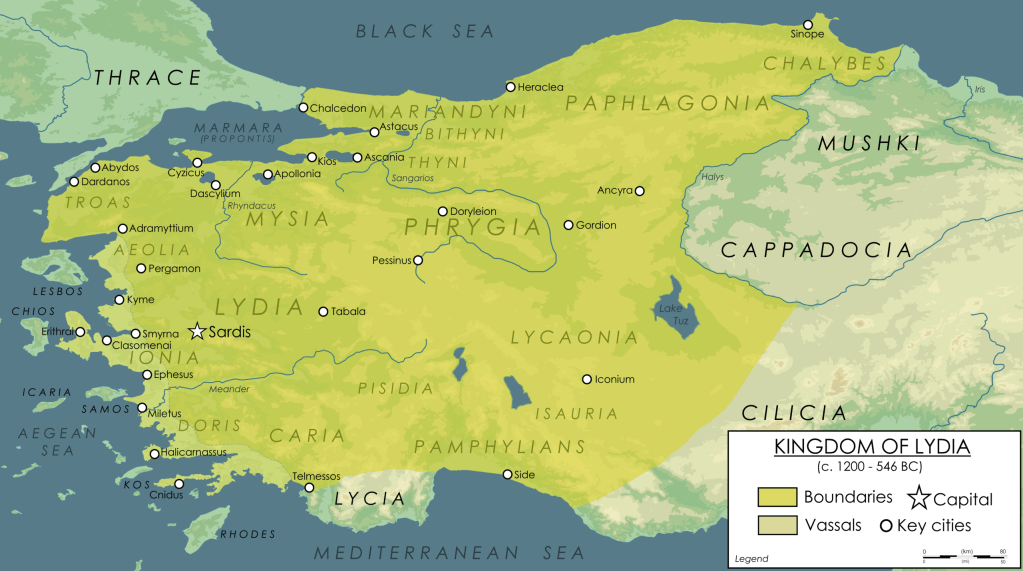
Lycia’s location along the Mediterranean coast, combined with mountainous terrain, meant, they became skilled sailors and traders. This put them in contact with the cultures of the eastern Mediterranean. This constant contact helped spread cultural ideas in both directions. Greek artistic styles appeared in Lycian cities, while Lycian practices, especially in burial customs and political organization, traveled outward. In the classroom, this is a strong example of how geography influences economic choices and cultural exchange. It’s also a reminder that, even today, travel by sea dominates trade and commerce.
Inventions of Coins
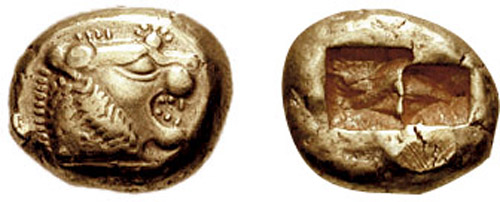
The Lydians created the first coins made from electrum, a natural mix of gold and silver. These coins were stamped with official symbols, which showed their value and guaranteed their weight. This made trade much faster and more trustworthy than bartering. The idea spread quickly throughout the Greek world, with city-states minting their own coins. The Persians even adopted coinage after conquering Lydia.
Lycian Tombs and Their Influence on Later Architecture
Lycian rock-cut tombs are one of the clearest examples of their influence on later civilizations. These tombs were carved directly into cliffs. This suggests that Lycians believed the dead continued a form of everyday life in the afterlife. Greek builders later adopted similar decorative features, such as carved façades and columned entrances, when constructing monumental tombs and shrines in Anatolia. When the Romans took control of the region centuries later, they continued this tradition by building elaborate stone tombs that emphasized family status and public memory. These architectural choices show a direct line from Lycian beliefs to Greek and Roman funerary practices, making them a useful case study for how cultural ideas evolve rather than disappear.

The Lycian League and Its Political Legacy
The Lycian League provides one of the best early examples of a confederate political system. Instead of being ruled by a single king, they had a council that voted on important matters. Larger cities were given more voting power, but smaller cities were not excluded, creating a balance between population and representation. Greek writers later took interest in this system, and Roman thinkers admired how it combined unity with local independence. Centuries later, political philosophers such as Montesquieu pointed to the Lycian League as a successful early model of federal government. In teaching, this allows students to see that ideas like shared power and representation existed long before modern democracies.
Writing, Inscriptions, and Cultural Exchange
The Lycians also contributed to cultural exchange through their use of writing. They developed a written language, now known as Lycian, and used it for public inscriptions on tombs, monuments, and official buildings. These inscriptions recorded laws, family relationships, and religious beliefs, offering historians valuable insight into how Lycian society functioned. Over time, Greek replaced the Lycian language in many public spaces, showing how cultural blending occurred through trade and political influence rather than sudden change. This gradual shift helps students understand how languages and cultures mix over time in connected regions. Ask students ways they experience multilingual cultures in their own lives.
Why the Lycians Matter in Social Studies
Although Lycia was conquered by the Persian Empire in 546 BCE, its influence did not disappear. Lycian ideas about city organization, shared government, and monument building continued to shape Greek and Roman societies long after Lycia lost its independence. For students, the Lycians demonstrate that historical influence is not limited to large empires. Smaller civilizations, especially those positioned along major trade routes, often play an outsized role in shaping the ancient world.
Recommended Reading
Lydia & the First Coins — American Numismatic Association (Money Museum): A clear overview of how the earliest coins were made and used.
Lydians and Their Culture — A helpful summary of Lydian culture and their interactions with other civilizations.
Ryan Wagoner
The Lyceum of History
“I am indebted to my father for living, but to my teacher for living well.” — Alexander the Great
Follow me on: Blog | TpT | YouTube | X | Instagram | Facebook



Leave a Reply