What if the past isn’t just behind us, but all around us? When students first encounter cyclical ideas of time in cultures like ancient India, Mesoamerica, or Greece, they’re often confused. They’ve been taught to expect history to move forward, showing progress or clear cause and effect, but that’s not how these cultures saw it. In Hindu thought, for example, the yugas are massive cycles of creation, preservation, and destruction, rather than a straight line of progress.
Mesoamerican calendars reflect repeating cosmic and agricultural cycles, while ancient Greek thinkers traced predictable rises and falls of humankind. To students trained in Western ideas of history, these frameworks can feel chaotic, but they reveal that many cultures saw historical change as a natural, inevitable cycle.
Understanding History as a Cycle
In cyclical frameworks, collapse isn’t a mistake; it’s expected. Prosperity, decay, and rebirth follow patterns that reflect human behavior, divine will, or cosmic forces. One way to make this tangible for students is to connect it to modern patterns: top companies rise and fall, fashion trends return, and weather patterns repeat. Recognizing these rhythms helps students see history as patterns, not failures.
A great discussion line: “If collapse is expected, you don’t write history to prevent it. You write it to recognize the signs.”
Cyclical Patterns Across Ancient Cultures
Egypt
#/media/File:Goddess_Nut_2.JPG)
- The Old, Middle, and New Kingdoms alternated between unity and division. Egyptians saw this as the eternal struggle between maat (order) and isfet (chaos), with periods of chaos naturally corrected by pharaohs restoring balance.
Mesopotamia
- Sumerians, Akkadians, and Babylonians viewed the rise and fall of city-states as divinely guided cycles. Kings rose, achieved glory, grew arrogant, fell, and were replaced, repeating the pattern. Flood myths, like Gilgamesh, reinforced the rhythm of destruction and renewal.
Greece
- Greek city-states experienced repeated conflicts, such as Athens versus Sparta. Historians and philosophers, including Herodotus, suggested these cycles reflected constant human behaviors rather than unique disasters.
India
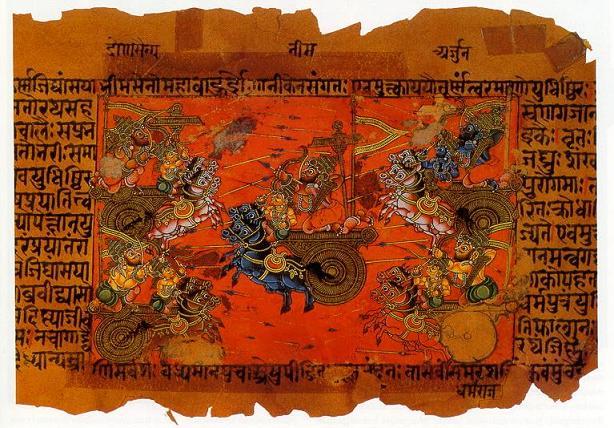
- Hindu and early Indian traditions framed empires like the Maurya and Gupta as part of cosmic cycles called yugas. Creation, preservation, and destruction were expected stages, reflecting the universe’s eternal rhythms rather than linear progress.
China
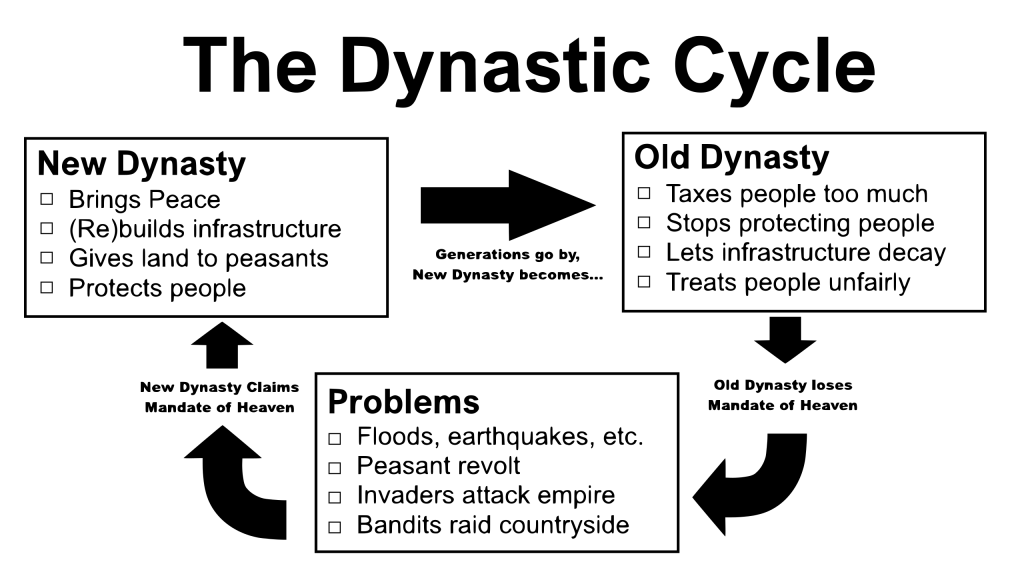
- The dynastic cycle held that every dynasty inevitably rose, prospered, grew corrupt, and fell, only to be replaced by a new dynasty under the Mandate of Heaven. Collapse was part of natural order, not tragedy.
Classroom Ideas for Cyclical Histories
Teachers can create activities that make cyclical concepts tangible:
Whole Class Activities
- Chart the rise and fall of multiple societies: Greek, Roman, Mayan, Chinese, Indian, and look for repeating patterns. This can be an ongoing activity that extends throughout the year. No need for anything extravagant, just a quick visual students can refer to.
- Compare historical cycles to modern phenomena, like business trends, fashion, or climate patterns, to make patterns relatable.
Small Group Activities
- Assign students different roles in examining cycles, each with a different focus: royal family, aristocracy, merchants, and commoners. This serves as a double entendre as students are now tasked with analyzing the same event(s) from different lenses.
- Extend this discussion by allowing each role to come up with his or her own solution(s). Done right, this setup encourages robust debate and critical thinking skills.
Individual Activities
- After discussing a cyclical event, students now have not only the background, but differing perspectives. This is the perfect time for an exit ticket to check for understanding. You’re not so much looking for a simple description as you are cause and effect relationships students infer.
These exercises help students see that history is not just a sequence of events but a series of patterns shaped by culture, belief, and human behavior.
Why Cyclical Histories Matter
Understanding cyclical frameworks encourages students to question the assumption that history is always linear or progressive. It helps them analyze patterns, predict outcomes, and appreciate how cultural perspectives shape historical narratives. Teaching cyclical alongside linear histories equips students to approach the past with curiosity, flexibility, and critical insight.
Ultimately, exploring cyclical time helps students see that histories serve multiple purposes: recording events, interpreting patterns, and preparing communities for the future. Recognizing these rhythms deepens global understanding and makes history more dynamic and meaningful.
Recommended Reading
Primary Sources Index for China — This section of Asia for Educators offers multiple translated documents such as Confucian Analects, Daoist texts, and government materials, great for exploring how Chinese thinkers discussed legitimacy, governance, and moral order over time.
Open World History — Ancient India Primary Sources — A collection of Vedic texts, selections from The Laws of Manu, and other early Indian documents. These texts contain cosmological ideas and social norms reflecting traditional Indian perspectives on time, order, and human life.
Making History: Continuity & Change Module (UCB) — This module offers free classroom activities like personal timelines, community history, and graphic organizers that help students see ongoing patterns or shifts
Recommended Resources
The Aztec Creation of the Five Suns — A student-friendly lesson on the Aztec Creation of the Five Suns, with reading passages, graphic organizers, and activities to explore the myth and its cyclical worldview.
Ryan Wagoner
The Lyceum of History
“I am indebted to my father for living, but to my teacher for living well.” — Alexander the Great
Follow me on: Blog | TpT | YouTube | X | Instagram | Facebook



Leave a Reply