
Long before Islam reshaped the Arabian Peninsula, the Sabaeans built one of the ancient world’s most impressive engineering projects and controlled a trade network that stretched from Africa to the Mediterranean. Centered in what is now Yemen, the Kingdom of Saba became wealthy through its domination of the frankincense and myrrh trade, rare luxury goods prized across the ancient world. For social studies teachers, the Sabaeans offer a powerful case study in how humans can not only adapt to, but thrive in an hostile environment.
The Marib Dam and the Power of Engineering
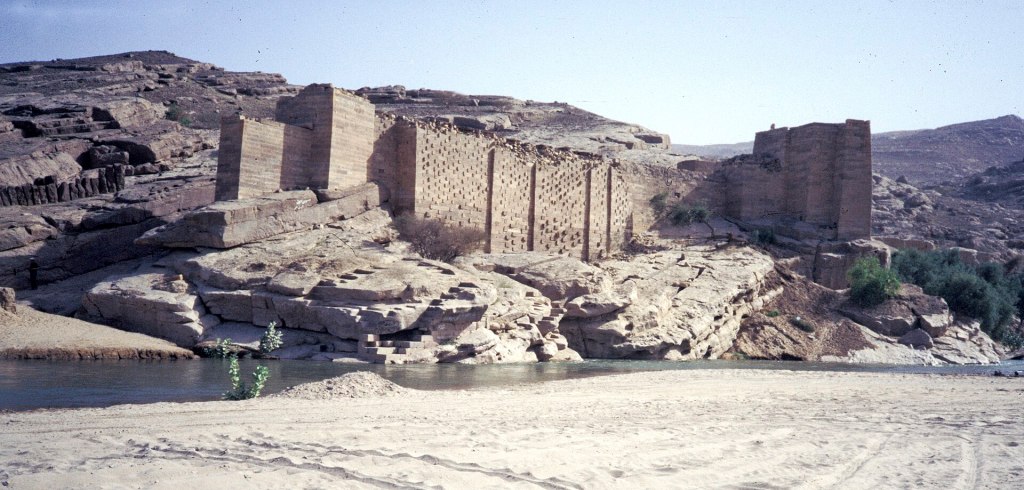
The most famous achievement of the Sabaeans was the Marib Dam, an enormous irrigation system that captured seasonal floodwaters and turned desert land into productive farmland. This achievement provides an excellent opportunity in the classroom to explore how engineering can shape an entire civilization. Teachers can guide students to analyze how controlling water allowed the Sabaeans to support large populations, grow surplus crops, and sustain long-distance trade. You can compare it to irrigation systems in Mesopotamia or along the Nile, as well as the modern American southwest. It also reinforces the idea that technological innovation is often the foundation of political and economic power.
Frankincense, Myrrh, and Global Trade Networks
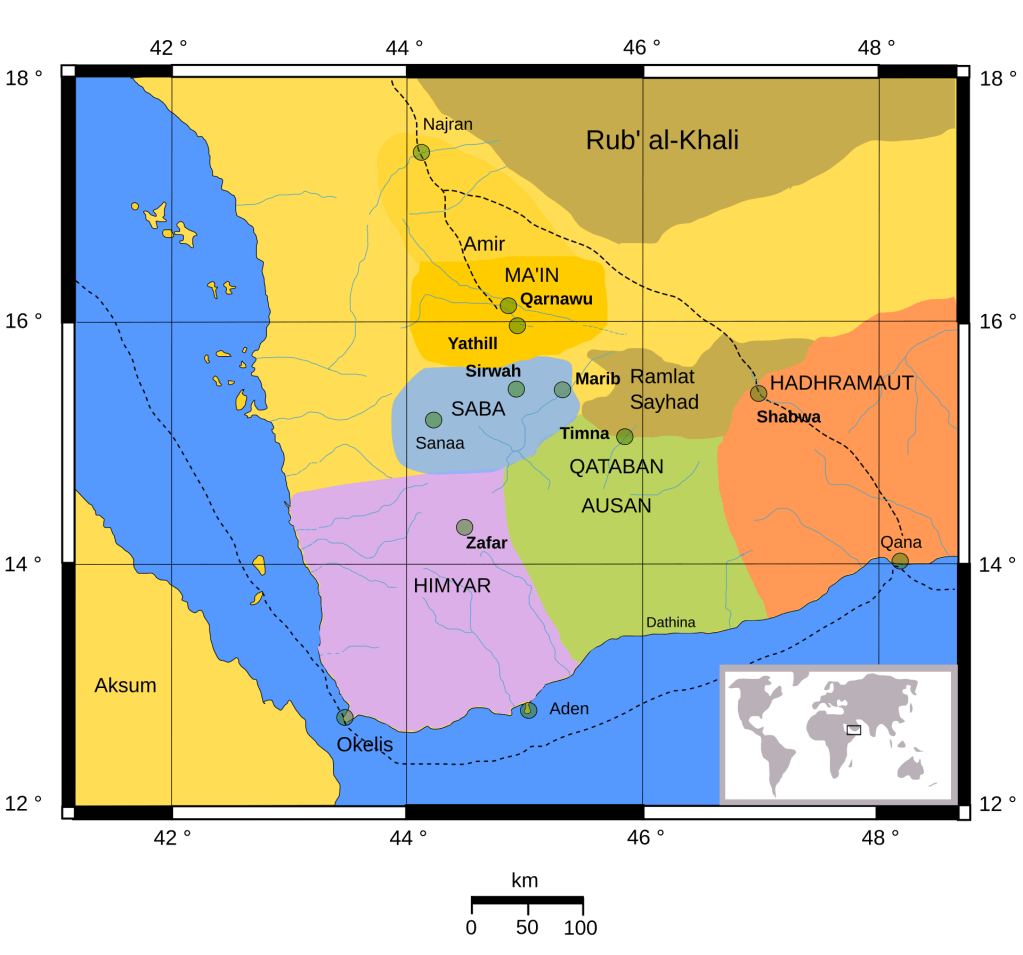
Sabaean wealth rested on control of the incense trade, especially frankincense and myrrh, which were used in religious rituals, medicine, and royal ceremonies from Egypt to Rome. In the classroom, this opens the door to discussions about why certain resources become valuable and how demand drives trade. Students can trace incense routes across Arabia and into Africa and the Mediterranean, building map skills while visualizing early global connections. This is especially important to show students how areas beyond the Greco-Roman or Silk Road trade networks.

The Sabaeans did not simply export goods; they managed caravan routes, taxed merchants, and protected trade corridors. Teachers can use this to introduce concepts like trade monopolies, tariffs, and economic specialization, helping students connect ancient economies to modern ones.
The Sabaeans can be found in writings from antiquity. Strabo wrote in Geography XVI.4.19, “The country of the Sabaei, a very populous nation, is contiguous, and is the most fertile of all, producing myrrh, frankincense, and cinnamon… By trade in these aromatics both the Sabaeans and the Gerrhaei have become the richest of all the tribes…”
Connecting Arabia, Africa, and the Mediterranean
The Sabaeans acted as key intermediaries linking southern Arabia with East Africa and the Mediterranean world centuries before Islam. This makes them ideal for teaching cultural exchange alongside commerce. As goods moved, so did ideas, technologies, and religious practices. Classroom discussions can explore how trade encourages cultural interaction and ask students to consider what might travel alongside material goods.
By examining Sabaean inscriptions, architecture, and trade connections, students see that Arabia was not isolated but deeply embedded in the ancient world. This challenges common assumptions and expands students’ understanding of pre-Islamic history.
Religious Significance
The Queen of Sheba is traditionally associated with Saba in southern Arabia (modern Yemen), though her historical identity remains uncertain; biblical accounts link her to Solomon, Ethiopian tradition places her in Aksum, and historians debate whether she represents a real ruler or a symbolic figure of Sabaean wealth. The Qur’an explicitly identifies her as the ruler of Saba in Surah An-Naml.
Why the Sabaeans Matter in the Classroom
Teaching the Sabaeans helps students recognize that ancient Arabia was home to advanced engineering, complex trade systems, and long-distance connections. Lessons can integrate geography, economics, and technology by examining how the Marib Dam supported agriculture, how incense trade created wealth, and how caravan routes linked distant regions.
Including the Sabaeans alongside civilizations like Kush and the Sogdians reinforces a broader theme: history is shaped by connectors, people who move goods, ideas, and technologies across regions. Using the Sabaeans in your curriculum gives students a more complete picture of the ancient world and highlights Arabia’s critical role long before later religious and political transformations.
Recommended Reading
The Saba – Encyclopedia Britannica – An overview of the pre-Islamic Arabian kingdom.
The Sabaeans – World History Edu – a brief overview of the Sabaeans as an ancient South Arabian civilization in Yemen that grew wealthy through incense trade and regional influence as well as their religious significance in the Bible and the Qu’ran.
UNESCO – Old Incense Trade Routes – outlines a series of archaeological cities, caravan stations, and trading hubs along the ancient incense paths of Yemen.
Ryan Wagoner
The Lyceum of History
“I am indebted to my father for living, but to my teacher for living well.” — Alexander the Great
Follow me on: Blog | TpT | YouTube | X | Instagram | Facebook



Leave a comment