The Copper Age was a time of early cities, trade networks, and copper tools that set the stage for the Indus Valley Civilization. Social studies teachers can use this period to show students how innovation, geography, and resource management helped villages along the Indus River grow into complex urban centers. Lessons can include hands-on examples of metallurgy, trade, and early urban planning, perfect for helping students see how human societies develop and connect over time.
Copper Tools and Craft Specialization
Communities in the Indus Valley and surrounding regions were among the first in South Asia to smelt and shape copper, producing tools that transformed daily life and labor. Examples include:
- Copper axes and chisels for clearing fields and woodworking
- Knives and awls for leather, textiles, and household tasks
- Pins, ornaments, and small ceremonial objects, demonstrating status and ritual practice
This division of labor meant some people focused on metallurgy while others made pottery, beads, or textiles. Social studies teachers can have students examine replicas or images of tools and ornaments, exploring how specialization created interdependent communities and early social hierarchies. This links technology, trade, and craft production directly to the structure of ancient societies. It’s a nice tie into the same division of labor dynamics we see in our world today.
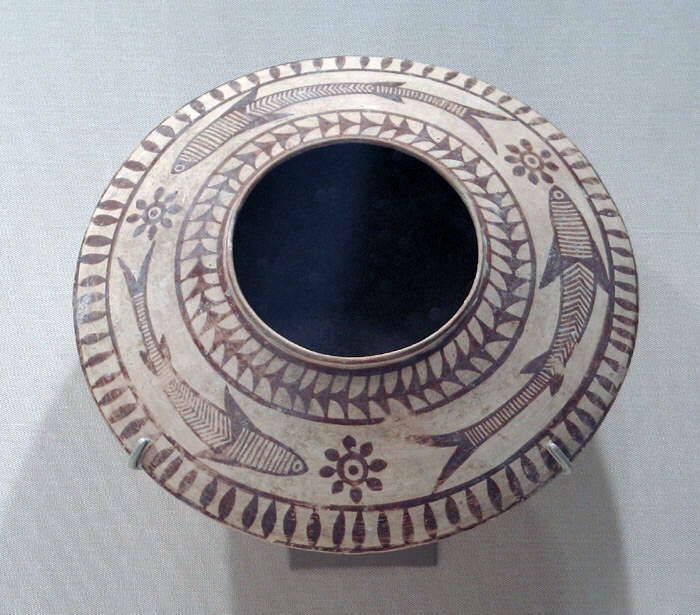
Proto-Urban Planning and Settlement Consolidation
Unlike the Near East and Anatolia, where cities and fortified settlements grew quickly alongside metallurgy, the South Asian Copper Age developed more gradually. In places like Mesopotamia, cities formed faster and often around temples or kings. The Indus Valley shows few signs of powerful rulers, large palaces, or royal tombs.
Cities like Mehrgarh show evidence of systematic building layouts, standardized storage, and craft workshops. Bricks, weights, tools, and seals were highly standardized across hundreds of miles. This level of consistency is rare elsewhere in the Copper Age and points to strong coordination. It offers a fascinating example of early trade and division of labor.
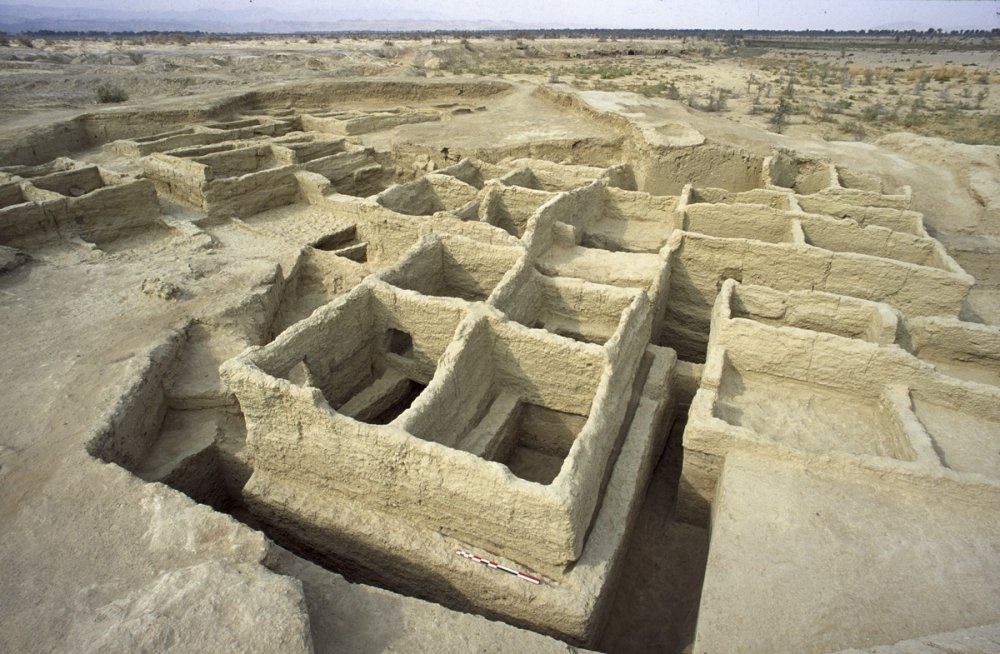
This urbanization had lasting effects: it paved the way for the cities of Harappa and Mohenjo-daro, the most well known cities of the Indus Valley Civilization. They featured sophisticated sewage systems, standardized weights, and large-scale trade infrastructure. It’s a great chance to discuss how communities use resources and organize their societies. You can use site maps to help students see how they adapted to this new technology.
Trade Networks Across South Asia
The Indus Valley communities were part of extensive trade networks:
- Trade stretched 400–600 miles to the Iranian Plateau, roughly the distance from Washington, D.C., to Chicago
- It extended 700–900 miles to the Arabian Peninsula, similar to New York City to Miami
Mapping these routes in class can help students appreciate the logistical challenges of moving copper, beads, and other goods across mountains, deserts, and rivers, and see how geography shaped early commerce and social networks. Students can also discuss why copper was so valuable and the economic realities of supply/demand, opportunity cost, and factors of production.
Proto-Writing and Communication
During this period, proto-writing emerged as a tool for record-keeping and trade management. Symbols on clay tags and seals likely tracked commodities, standardized weights, and indicated ownership. Unlike other regions during this time, the writings do not appear on royal monuments so common in places like Egypt and Mesopotamia.
This development shows a lasting pattern: innovations in record-keeping and administration enable societies to manage complex economies and urban centers, setting the stage for later civilizations, including the Indus Valley cities.
Classroom Applications for Social Studies Teachers
The foundations of the Indus Valley Civilization formed during the Copper Age, while its classic cities, such as Harappa and Mohenjo-daro, flourished later in the Bronze Age. By linking technology, trade, and urbanization to social and cultural change, teachers help students understand the impact of early innovation on later civilizations, making ancient history tangible and relevant. Social studies teachers can use this era to demonstrate technological innovation, early urbanization, and the interconnected patterns of history, helping students see how early human ingenuity shaped societies for centuries to come.
Recommended Reading
Harappan Culture – A resource that identifies how artifacts and ruins provided insight into the Indus River Valley’s technology, economy, and culture.
Harappa Teaching Resources – A site with free teaching support for the Indus Valley Civilization aimed at ages ~7–12 (and flexible for older students).
Mehrgarh – describes an ancient settlement in what is now Balochistan, Pakistan, that shows early farming, craft production, and copper use long before the classic Indus cities appeared.
Ryan Wagoner
The Lyceum of History
“I am indebted to my father for living, but to my teacher for living well.” — Alexander the Great
Follow me on: Blog | TpT | YouTube | X | Instagram | Facebook



Leave a Reply