
Language Revival: More Than Words
When people talk about a “dying language,” they often assume it’s lost forever, but history proves otherwise. Over the last 100 years, several language revival programs have done more than just slow decline—they have successfully brought endangered and even “dead” languages back to life. From the miraculous resurgence of Hebrew in Israel to the vibrant revival of Māori in New Zealand, these efforts show how cultural identity, education, and community-driven strategies can restore a language and transform entire societies.
Free Classroom Resource
Download the Hebrew and Māori Language Revival Worksheet
This classroom-ready worksheet includes a reading passage, vocabulary practice, comprehension questions, and an answer key.
The Miraculous Revival of Hebrew
Hebrew’s revival is nothing short of miraculous. By the late 1800s, it was largely a liturgical language, spoken only in prayers and religious study, while daily life for Jews in Europe and the Middle East was dominated by Yiddish, Ladino, and other local languages. Enter Eliezer Ben-Yehuda, whose vision was simple yet radical: Hebrew could live again as a native, everyday language. Families raised children speaking it, schools taught exclusively in Hebrew, and the growing community made it a central piece of identity and nation-building. Today, over 9 million people speak Hebrew fluently, not just as a second language, but as a mother tongue.
.jpg)
Māori: Community-Driven Language Revival
Māori tells a different story, but with equally powerful lessons. By the 1970s, fewer than 5% of Māori children spoke the language, after generations of English-only schooling and cultural suppression. Yet, the community refused to let the language die. Kōhanga Reo, or “language nests,” became early childhood centers where elders spoke exclusively Māori to young children. This intergenerational approach ensured that the language wasn’t just preserved, it was lived. Over time, Māori-medium schools, media, and government recognition reinforced this revival. Today, Māori is thriving in both educational and public spaces, visible on street signs, TV, and in the daily lives of thousands of speakers.

Classroom Connections: Teaching Language Revival
What makes these two cases so compelling for social studies classrooms is the way they tie language to identity, community, and nation-building. When discussing Hebrew, students can explore how language can unify a dispersed population, reinforce cultural memory, and even serve as a tool in establishing a new state. Māori, on the other hand, provides a lens to examine how colonized communities fight back against assimilation, using language education as a form of cultural activism.

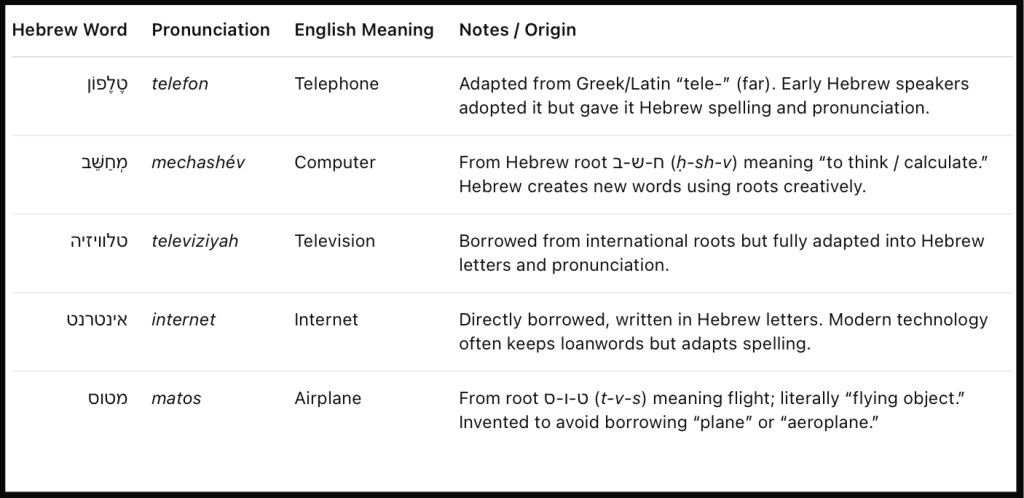
Imagine students mapping the spread of Hebrew words that were newly invented for modern concepts, or designing a “language nest” project that explores how teaching young learners can revive cultural practices. You can also bring in debates about government policy, colonialism, and the role of schools in shaping national identity. Students will see that language revival is far from just a linguistic exercise; it’s deeply social, political, and personal.
The Urgency: Thousands of Languages at Risk
Today, thousands of languages are at risk of disappearing, with many spoken by only a few hundred people. Each lost language isn’t just words—it’s a lost culture, history, and worldview, which makes the revival of endangered languages like Hebrew and Māori more urgent and inspiring than ever. A student’s sudden interest in the subject can lead down an entire rabbit hole exploring the topic.
Key Lessons from Hebrew and Māori
Comparing Hebrew and Māori shows that while the strategies differ—national adoption versus community-driven immersion—the core of successful revival lies in children, culture, and consistent daily use. These stories give students a model for thinking about resilience, identity, and the power of human agency. Incorporating these examples into your classroom lets students understand that history isn’t only about battles or treaties—it’s about the living, breathing ways communities survive, adapt, and even flourish against the odds, and how they tell their stories matters just as much, if not more, than anything else.
Recommended Reading
First Voices — Platform for Indigenous language revitalization worldwide. Teachers can explore teaching strategies, resources for kids, and cultural context that parallel Māori and Hebrew revival strategies.
Living Tongues Institute — Teacher-focused materials on language preservation and revival methods, global case studies, and classroom activities.
Ryan Wagoner
The Lyceum of History
“I am indebted to my father for living, but to my teacher for living well.” — Alexander the Great
Follow me on: Blog | TpT | YouTube | X | Instagram | Facebook



Leave a Reply