Background
How did Alexander the Great extend his empire to the eastern edges of the known world? The Battle of the Hydaspes in 326 BCE offers secondary social studies teachers a vivid case study in leadership, strategy, geography, and the cross-cultural encounters of ancient warfare. Fought between Macedonian forces and the army of King Porus in the Punjab region (modern Pakistan), this battle illustrates clever tactics like feigned river crossings, the use of cavalry maneuvers, and the impact of leadership on the outcome of battles. It also provides lessons about the spread of Hellenistic culture and the exposure of Greek forces to South Asian military traditions.
Context and Forces
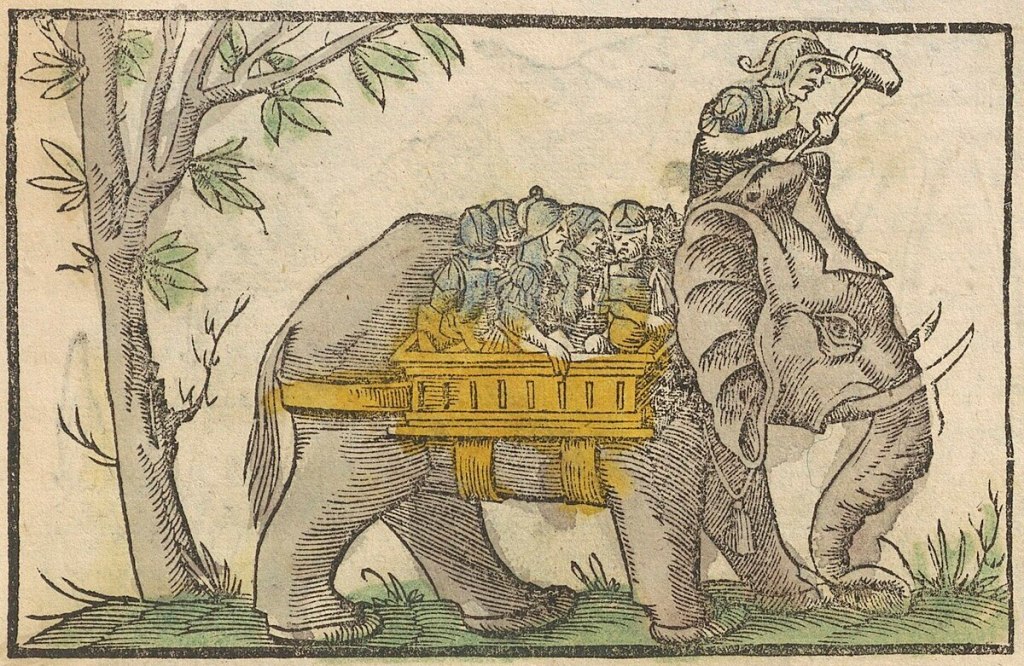
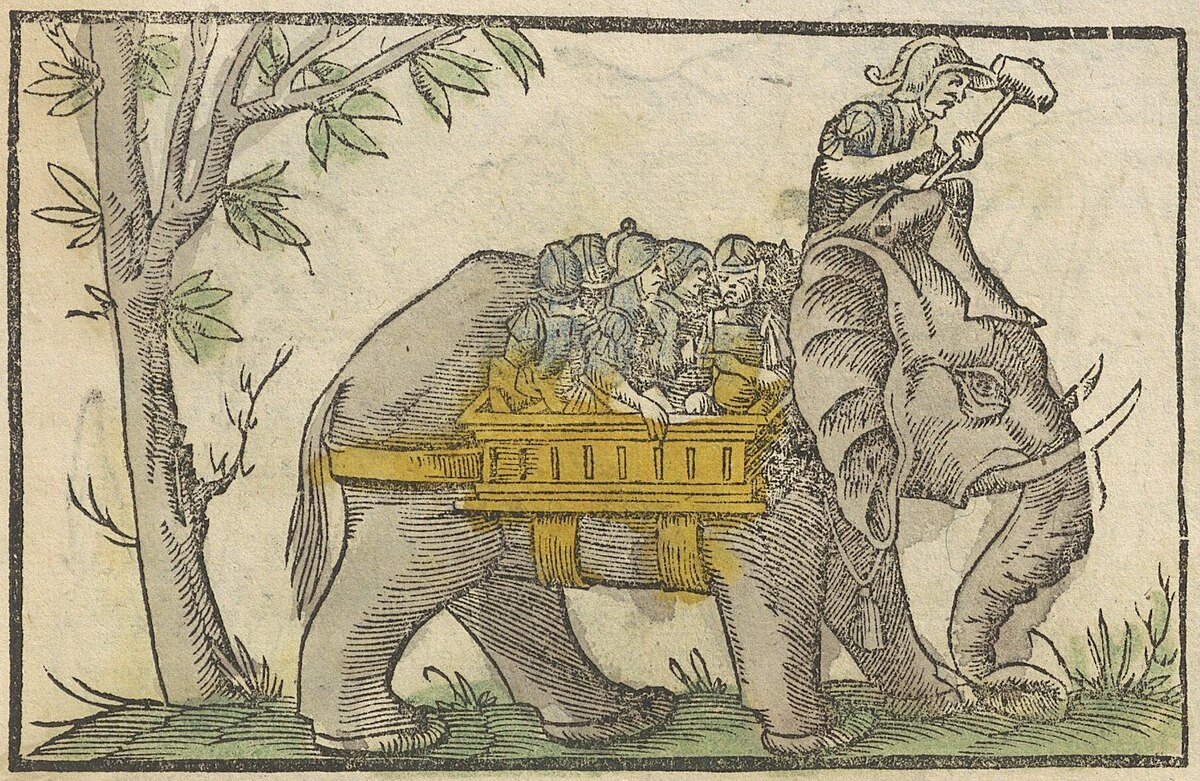
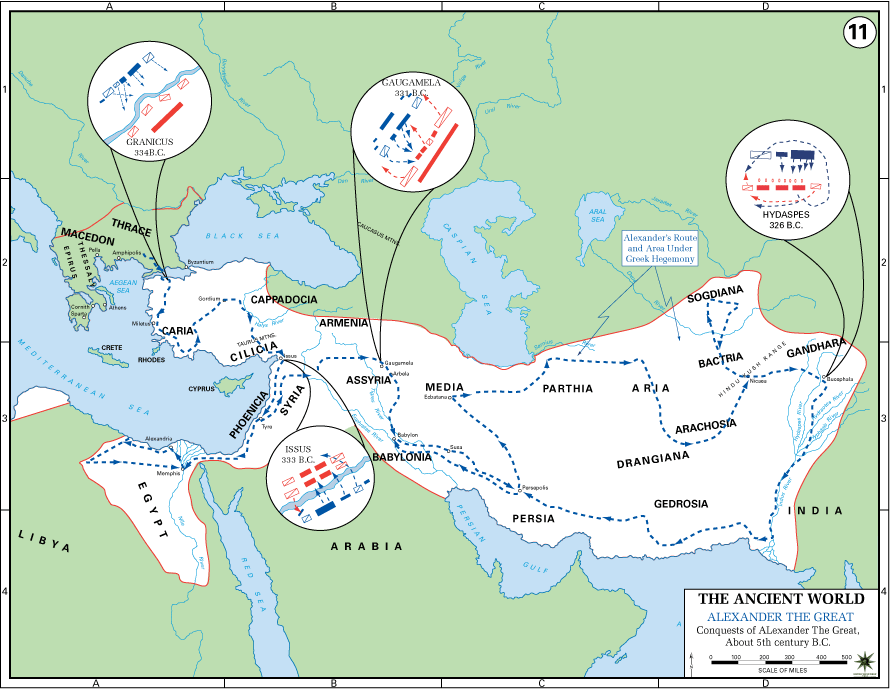
Alexander’s campaign in India marked the easternmost expansion of his empire. After subduing the Persian Empire, he pushed into the Punjab region, where he faced King Porus, who commanded war elephants and a well-trained army. The Hydaspes River created a natural barrier, challenging Alexander to find a way to engage Porus without incurring catastrophic losses. The Macedonian army, skilled in phalanx formations and cavalry maneuvers, contrasted with Porus’ combination of elephants (likely the first time the Macedonian army had ever encountered them), infantry, and cavalry. Students can map the Hydaspes River and troop movements to analyze the role of terrain in battle strategy.
Strategy and Tactics
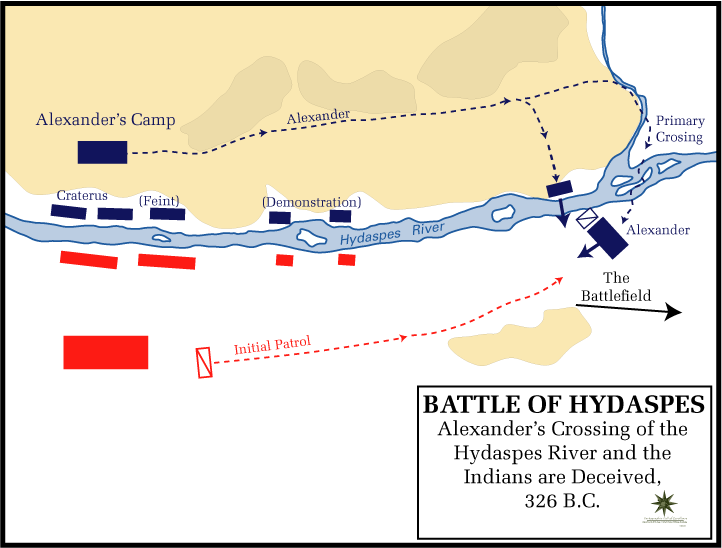
The battle’s decisive moment came from Alexander’s ingenuity. He staged a feigned river crossing, drawing Porus’ attention upstream while secretly moving troops across a less-guarded point. This maneuver allowed the Macedonian cavalry to flank Porus’ forces, neutralizing the elephants’ impact and destabilizing the enemy lines. The disciplined use of phalanxes and coordinated infantry assaults ensured that Macedon’s smaller force overcame Porus’ numerically significant army. A “what would you do?” exercise can prompt discussion on risk, deception, and leadership decisions.
Leadership and Decision-Making
Alexander’s leadership was central to victory. His ability to read the battlefield, adapt to unexpected challenges, and inspire loyalty from his troops demonstrates timeless lessons in command. Porus’ bravery, especially in confronting the Macedonian phalanx and elephants head-on, provides a contrasting perspective on heroism and strategy. In fact, Porus impressed Alexander so much he allowed Porus to remain ruler of his kingdom and even gave him additional territory to govern. This dual narrative invites students to consider the interplay of courage, intelligence, and planning in historical outcomes. It also sets the stage for a “what would you do?” exercise can prompt discussion on risk, deception, and leadership decisions.
Historical Impact and Cultural Exchange
The victory at the Hydaspes marked the eastern limit of Alexander’s empire, with the summer monsoons being the last straw for his army. It created a frontier where Greek and South Asian cultures intersected. Soldiers returning from India brought new knowledge of military tactics, local customs, and even exotic animals like elephants to the Hellenistic world. In a day and age with zoos, 24/7 news, and easy Internet access, this can be easy to overlook. It offers a chance for students to examine how surreal exploring what was for the Macedonians, the very edge of the world.
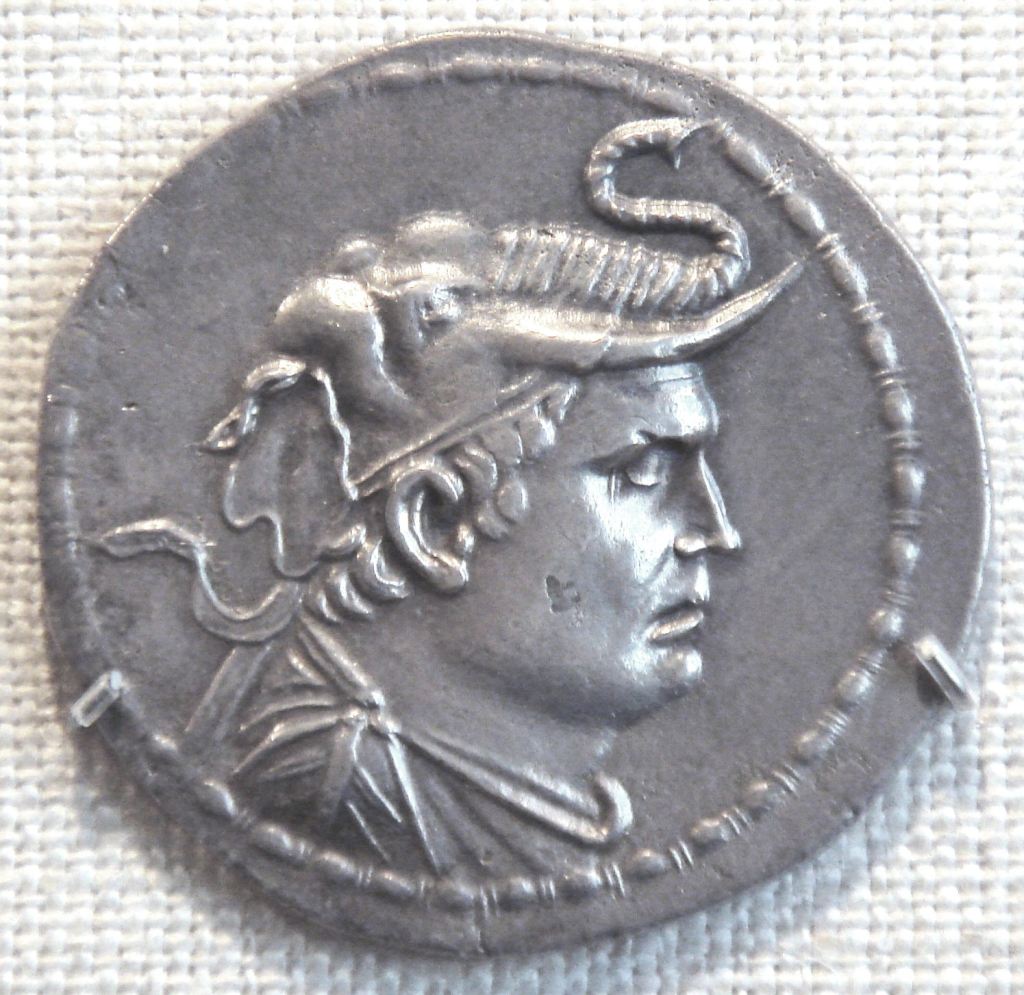
Alexander’s invasion of the Punjab demonstrated the vulnerability of the smaller, independent Indian states. Indian rulers who survived Alexander’s campaign encountered Greek-style organization, cavalry tactics, siege warfare, and methods of governance. These ideas influenced Indian elites and may have inspired later rulers to consolidate power more effectively. Why does this matter for the history classroom? About 20 years after Alexander left India, Chandragupta Maurya capitalized on the weakened local kingdoms and the opportunity left by the retreating Macedonian forces. He united much of northern India and founded the Mauryan Empire (c. 321 BCE), which historians consider the first unified empire in India. He expelled the remaining Greek satraps (governors) left by Alexander from the Punjab and Indus regions, but the cultural exchange continued for centuries to come.
Classroom Connections
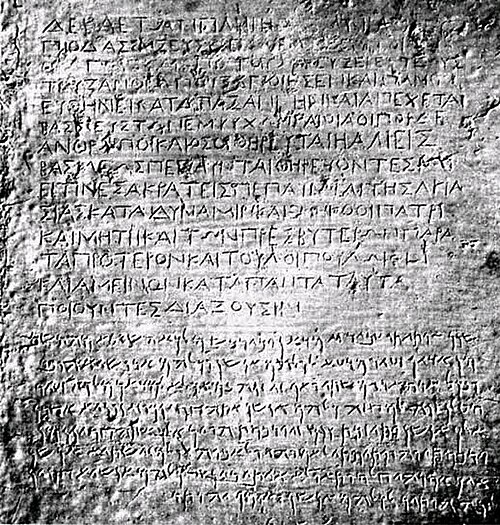
At the end of the day, the Battle of the Hydapses illustrates how the consequences of a single day in history can reverberate far into the future. For the social studies classroom, it offers further study into the cultural diffusion that took place in the later Greco-Bactrian and Indo-Greek kingdoms. Teachers can engage students in a discussion of cross-cultural influence and how exposure to other cultures shapes society, both in the past and the present.
Recommended Reading
Battle of Hydaspes — World History Encyclopedia (narrative and consequence)
Hydaspes (326 BCE) — Livius.org (detailed analysis)
Battle of Hydaspes — Effects & Aftermath — History Unravelled
Classroom Resources (optional)
The Hellenistic Age — This ready-to-use lesson helps students understand the impact of Alexander the Great and the Hellenistic Age, without adding to a teacher’s planning load.
Ryan Wagoner
The Lyceum of History
“I am indebted to my father for living, but to my teacher for living well.” — Alexander the Great
Follow me on: Blog | TpT | YouTube | X | Instagram | Facebook



 Lyceum of History
Leave a comment