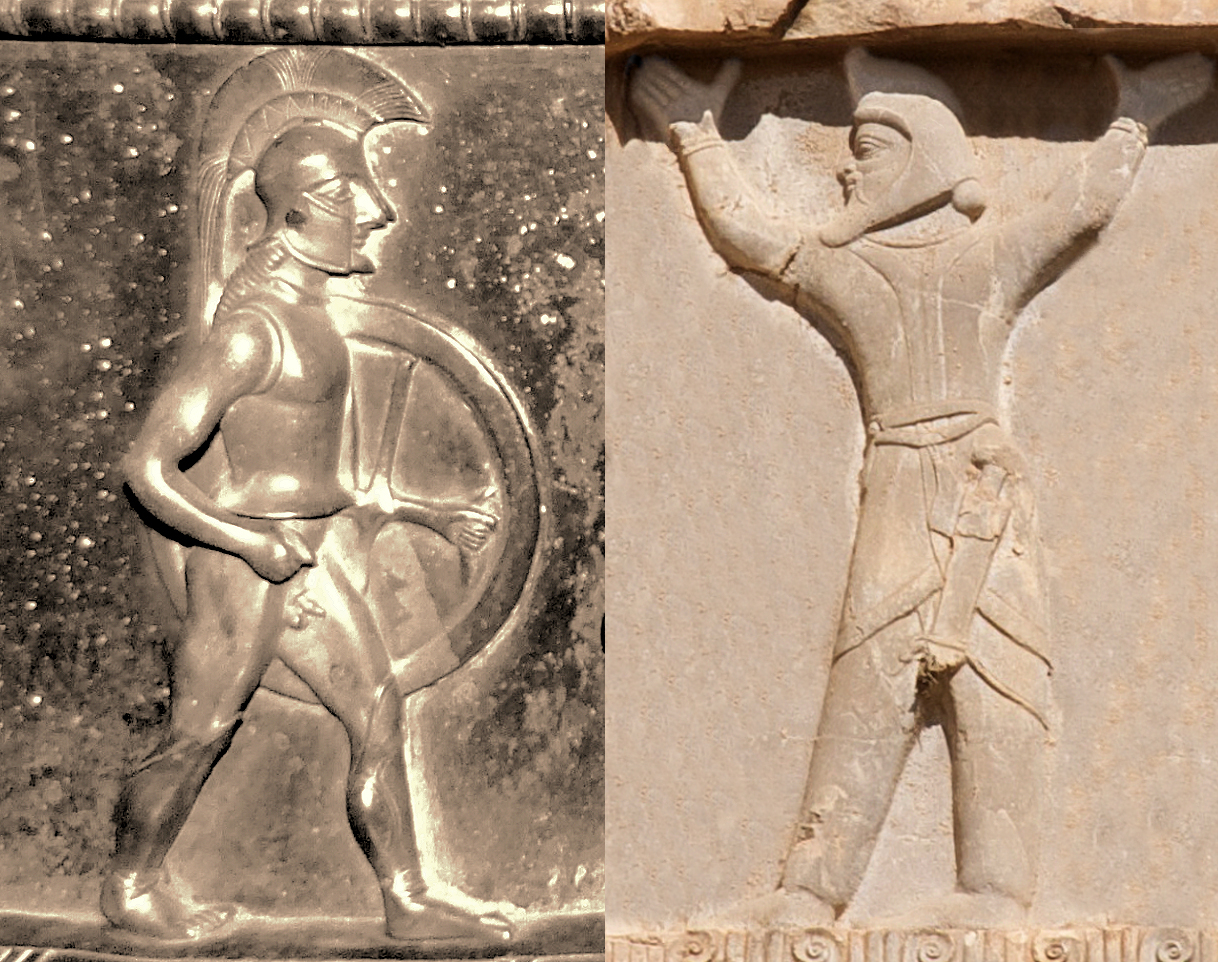
Background: The Persian Invasion of Greece
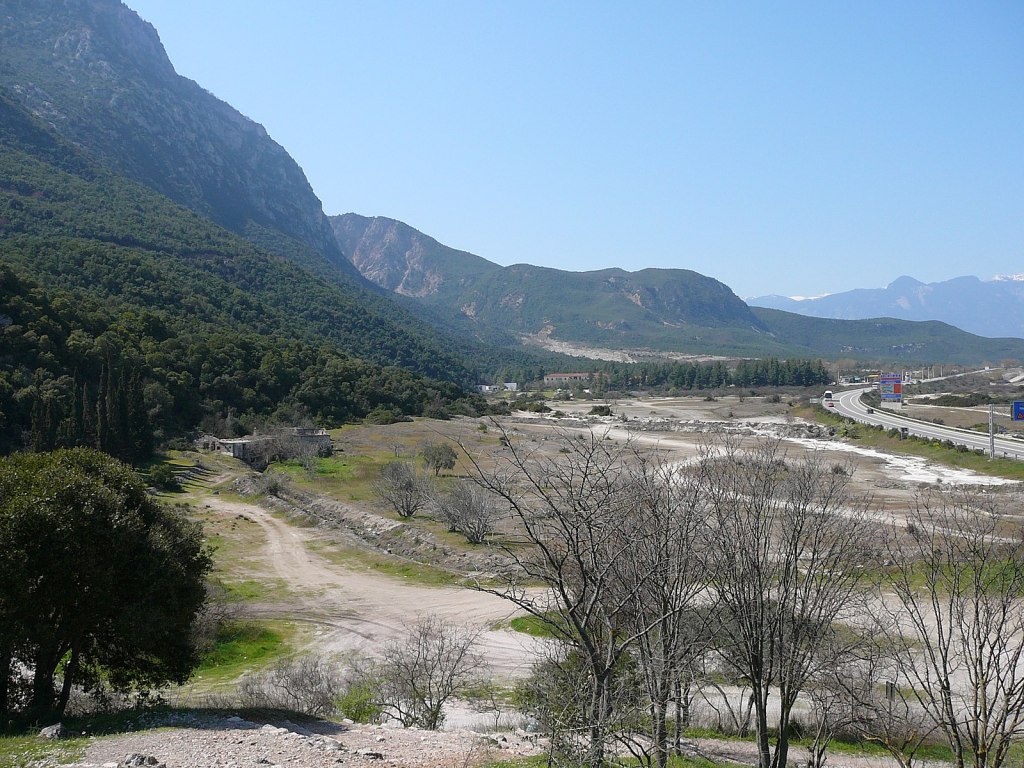
Source: Fkerasar, Wikimedia Commons, CC BY-SA 3.0
How did 300 Spartans and their allies hold off a massive Persian army at the Battle of Thermopylae in 480 BCE? This iconic clash provides secondary social studies teachers a perfect case study in leadership, courage, geography, and strategy. Spartan King Leonidas’ decisive leadership, the tension between heroism and practical strategy, the choke-point geography of the Thermopylae pass, Persian numerical advantage, and the lasting impact on Greek morale all offer rich opportunities for student exploration through role-plays, map tracing, and “what would you do?” classroom scenarios. For teachers looking to create a memorable lesson on the Battle of Thermopylae, these elements help students connect historical events to leadership, ethics, and civic decision-making.
Spartan Leadership and the Role of Leonidas
In 480 BCE, King Xerxes’ Persian army, reportedly hundreds of thousands strong, invaded Greece to punish the city-states for resisting Persian expansion. Facing overwhelming odds, the Greek coalition, led by Leonidas and 300 Spartans alongside several thousand allies, chose Thermopylae, a narrow mountain pass flanked by cliffs and the sea, as their battleground. The geography neutralized much of the Persian numerical advantage, forcing their vast army into tight formations where the disciplined Greek hoplites could hold their ground. Spartan hoplites, heavily armored with shields and spears, formed a phalanx that created interlocking defenses, a perfect example of how strategy and terrain work together in warfare.
Heroism vs. Strategy: The Last Stand
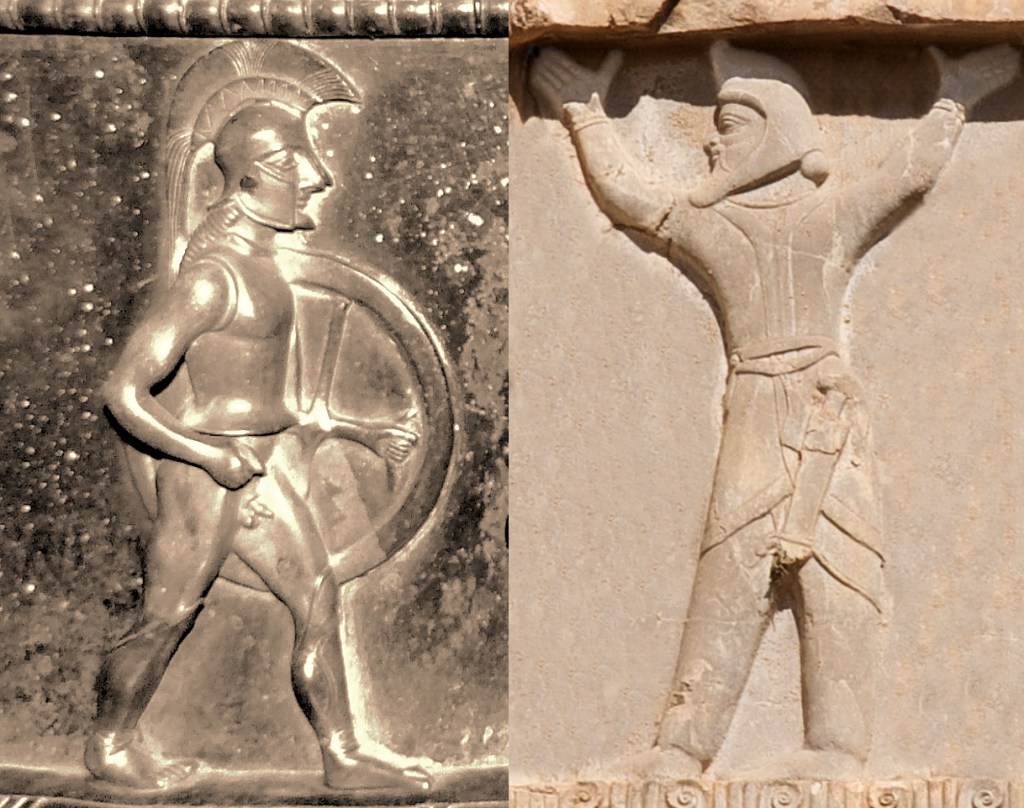
Source: Wikimedia Commons (enhanced image), CC BY-SA 4.0
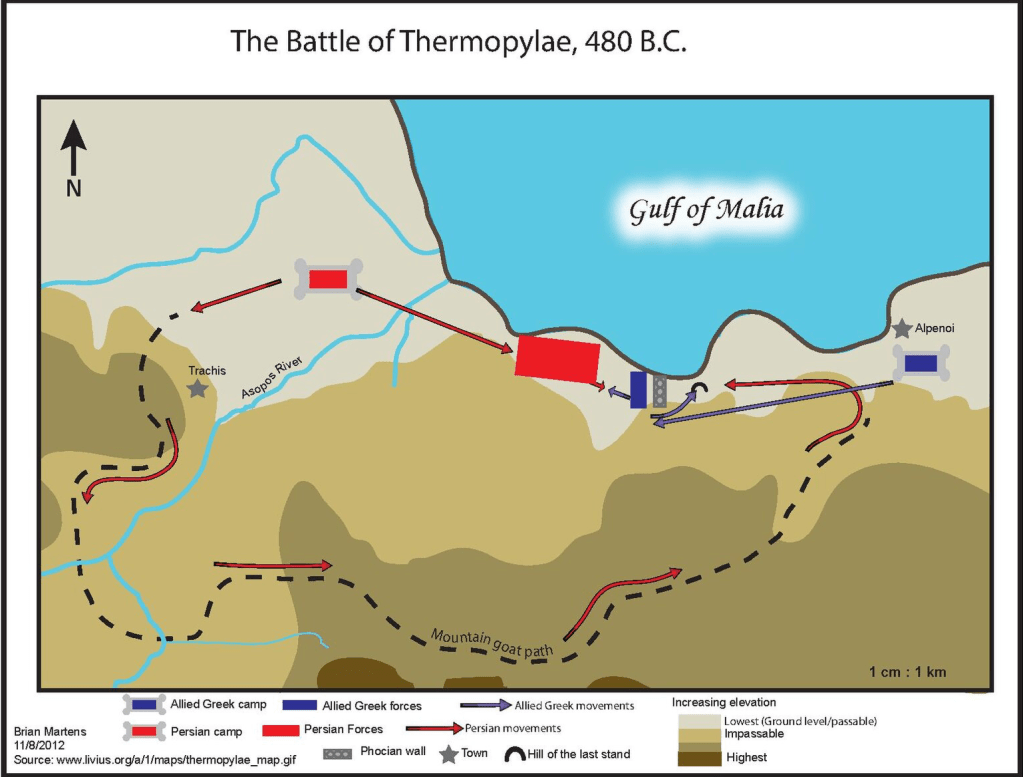
What makes Thermopylae particularly memorable is the betrayal of the Greek traitor Ephialtes of Trachis, who revealed a secret mountain path to the Persians. Leonidas’ response demonstrated the interplay between heroism and practical strategy. Recognizing the inevitability of defeat, he ordered most of the Greek forces to retreat, preserving their lives for future battles. Leonidas and his 300 Spartans, along with a few hundred other Greek soldiers, stayed behind to fight to the death, delaying the Persians and giving the rest of Greece crucial time to organize. The Persian destruction of Athens that followed would echo over a century later, when Alexander the Great famously burned Persepolis in part as symbolic revenge for Persia’s earlier invasions of Greece. This sacrifice elevated Greek morale and became a symbol of courage and leadership that resonates in history and classroom discussions alike.
Classroom Applications
For social studies teachers, Thermopylae offers multiple hands-on learning opportunities. Students can trace troop movements on maps of the region to understand how geography shaped strategy. They can participate in “what would you do?” role-play scenarios, debating the balance between courage, self-sacrifice, and tactical retreat. Discussions can explore the difference between heroism and practical decision-making, encouraging students to consider how small groups or individual actions can influence larger outcomes. These activities reinforce critical thinking, empathy, and civic awareness while making history tangible.
Lessons in Leadership
The Battle of Thermopylae also highlights enduring lessons about leadership, discipline, and moral decision-making under pressure. Spartan training, cohesion, and Leonidas’ tactical foresight show that strategy and planning often outweigh sheer numbers. By connecting these lessons to classroom activities, teachers can help students explore the ways human choice, geography, and leadership shape history. Thermopylae reminds us that history is not only a record of battles but also a story of courage, strategy, and the enduring impact of human decisions.
Recommended Reading
Battle of Thermopylae – EBSCO Research Starters – A summary that provides concise background and context and are a great foundation for students beginning research.
The Battle of Thermopylae: 300 Spartans vs the World – A general background reading, narrative history.
Livius.org – Herodotus on Thermopylae – The main source for the battle of 480 is Herodotus, Histories, 7.201-233, which is offered here in the translation by G.C. Macaulay, with adaptations.
Recommended Resources
Greco-Persian Wars Reader’s Theater — Script + Fluency & Discussion Questions
Ryan Wagoner
The Lyceum of History
“I am indebted to my father for living, but to my teacher for living well.” — Alexander the Great
Follow me on: Blog | TpT | YouTube | X | Instagram | Facebook



 Lyceum of History


Leave a comment