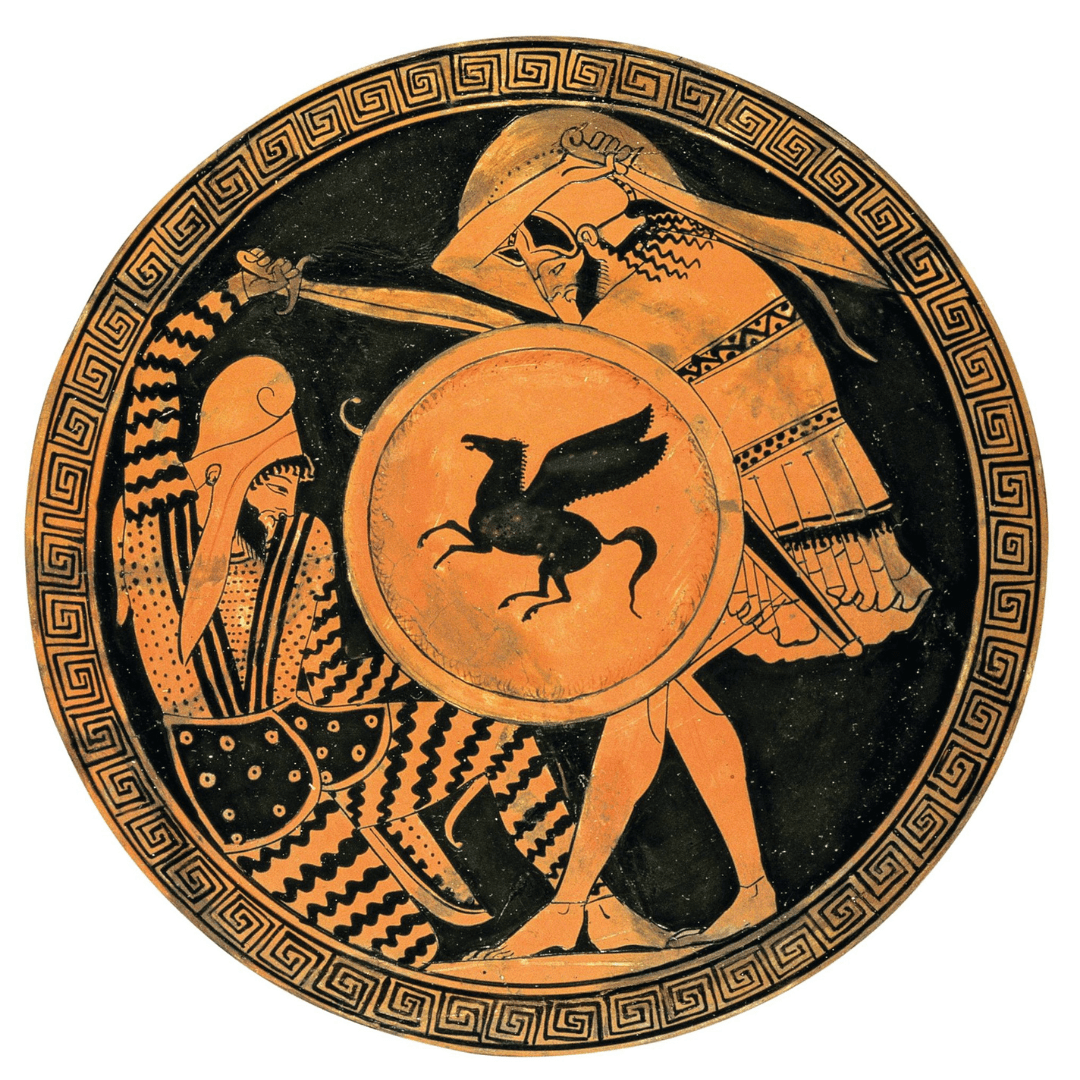
The Persian Invasion of Marathon
What lessons can secondary students learn from an underdog victory in ancient history? The Battle of Marathon in 490 BCE provides a vivid example. During the First Greco-Persian War, the Persian Empire under King Darius I landed on the plain of Marathon just outside Athens, aiming to punish the city for supporting the Ionian Revolt and expand Persian control into Greece. The Athenians faced a daunting challenge: about 10,000 citizen-soldiers, aided by 1,000 Plataeans, against a Persian force nearly twice their size.
Greek Strategy and the Phalanx
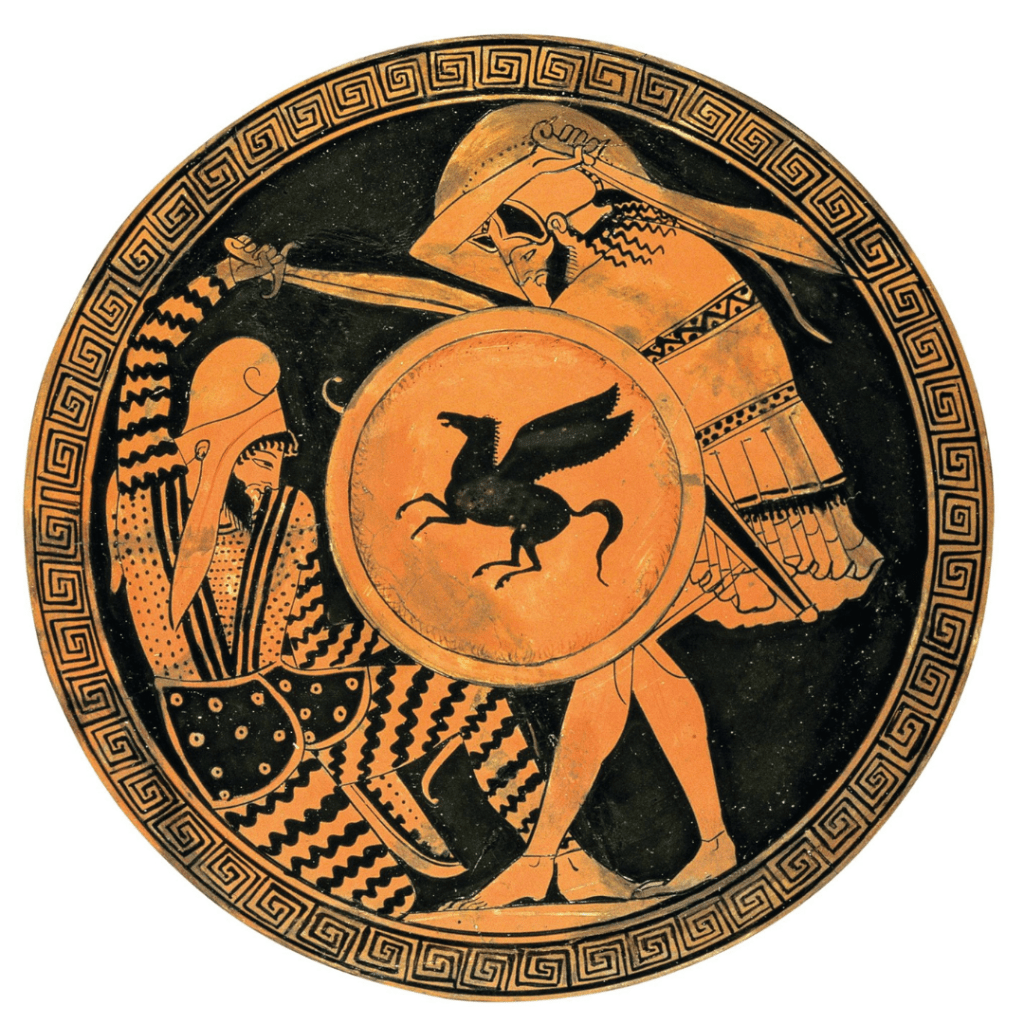
The Athenians relied on their heavily armored hoplites and the disciplined phalanx formation. Each hoplite carried a long spear, a large shield (hoplon), and layered armor. With this, they formed a wall of interlocking shields and spears. The Persians, by contrast, used light infantry and archers, with cavalry largely absent during the initial engagement. This difference in troop composition set the stage for a dramatic test of strategy, courage, and terrain.
General Miltiades crafted a bold tactic: he thinned the center of the phalanx and strengthened the wings, then ordered a full-speed charge across the Marathon plain. This minimized exposure to Persian archers and exploited the hoplites’ heavier armor and cohesion. When the Greek wings crushed the Persian flanks and swung inward, the Persians were encircled and routed, retreating to their ships. Greek losses were remarkably low.

The Role of Geography
The geography of Marathon played a crucial role. The wide, flat plain allowed the Greek phalanx to maintain formation while restricting Persian cavalry. The surrounding hills prevented easy outflanking of Greek wings. This shows how terrain can shape the outcome of battles, a point students can explore by plotting troop movements on maps of ancient Greece.
Victory, Legacy, and Classroom Connections
The victory had enormous consequences. It proved that ordinary citizens in disciplined formations could defeat a larger imperial army, boosting Athens’ confidence and prestige. Politically, it reinforced the idea that a democracy’s citizens could defend the city-state through collective effort. And the famous legend that a messenger ran from Marathon to Athens to announce the victory inspired the modern marathon race, symbolizing endurance and civic responsibility.
This story also offers natural classroom connections. Students can label maps of Marathon and Athens, then annotate Greek and Persian troop formations. A debate activity could ask, “Why did Athens win despite being outnumbered?” Pulling primary source readings from Herodotus’ Histories helps students compare myth and history. It can show how ancient Greeks understood bravery, strategy, and their world. These exercises turn the Marathon story into a hands-on lesson in geography, military strategy, and civic identity. Studying Marathon reminds us that history is not just a list of dates, but a story of strategy, courage, and place, with lessons that resonate in both the classroom and civic life today.
Recommended Reading
Student Overview / Classroom Resource: Battle of Marathon — SchoolHistory.co.uk offers a friendly, readable summary and activities for young learners.
EBSCO Research Starters: Battle of Marathon — An overview with key facts and context for the battle between Athens and Persia.
Herodotus, The Battle of Marathon — A primary source account of the battle.
Recommended Resources
Greco-Persian Wars Reader’s Theater — Script + Fluency & Discussion Questions
Ryan Wagoner
The Lyceum of History
“I am indebted to my father for living, but to my teacher for living well.” — Alexander the Great
Follow me on: Blog | TpT | YouTube | X | Instagram | Facebook



 Lyceum of History
Leave a comment