Origins and Rise
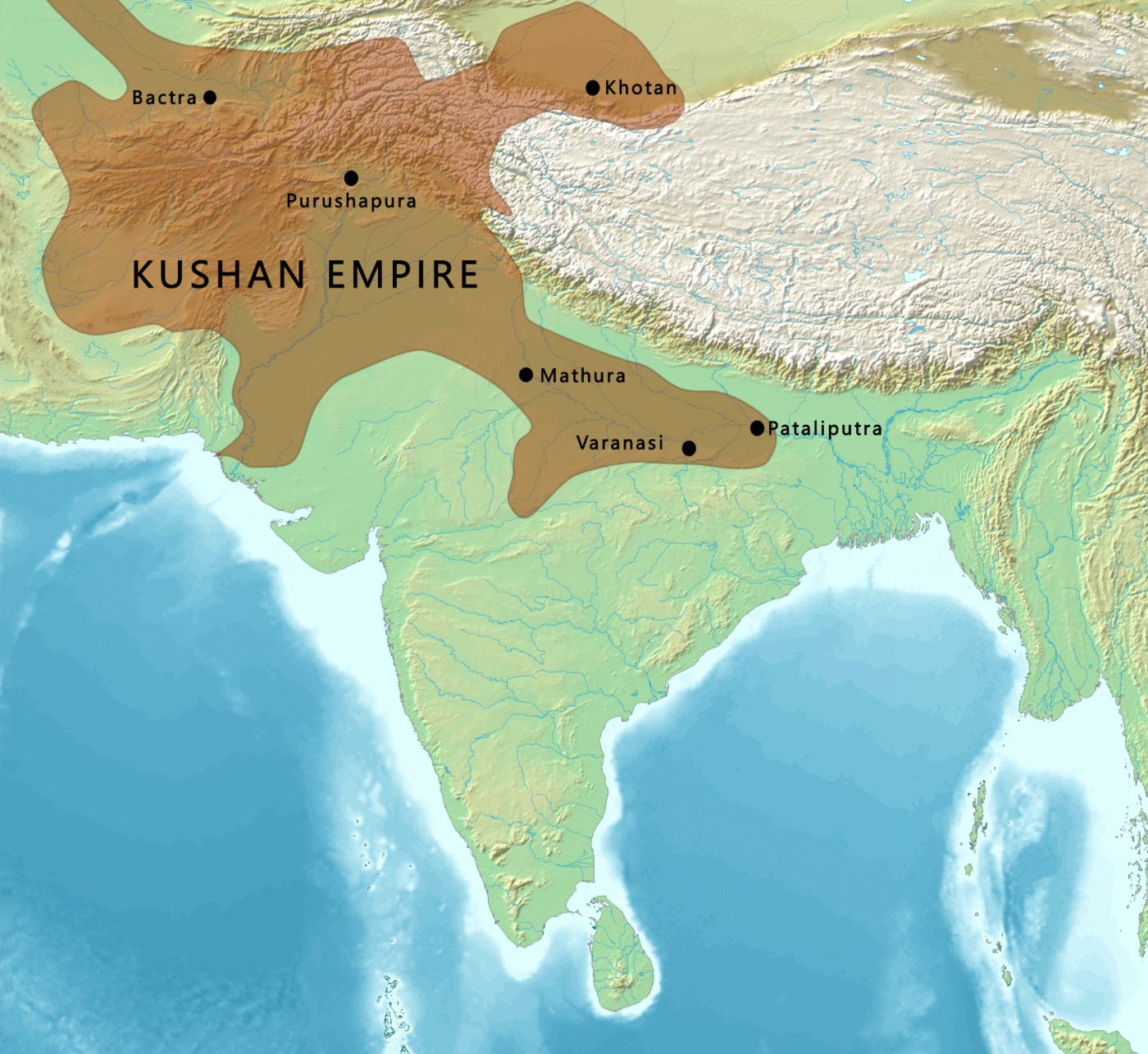
The multicultural world we find ourselves living in today provides us with both strengths as well as challenges, but the process has unfolded many times before. What can it teach us? Let’s take a look at the Kushan Empire. The empire emerged in the 1st century CE when the nomadic Yuezhi tribes migrated from Central Asia into Bactria and northern India.

During its height, the Kushan Empire stretched from the shores of the Aral Sea to the Ganges plain and stood at the crossroads of East and West, controlling vital trade routes that linked the Mediterranean world, Central Asia, and the Indian subcontinent. Caravans carried silk, spices, metals, and ideas. All of this blended together and left their mark on the region. The Kushans were by no means the first to control the area and they certainly wouldn’t be the last. So what makes them of interest to us?

The government under the Kushans managed a multi‑ethnic, multi‑religious population, embracing Zoroastrians, Buddhists, Hindus, and more. Their coinage, stamped in gold, silver, and copper, blended Greek, Iranian, and Indian motifs. Just like today, the blending of cultures affected all areas of life. We can see the same pattern in our modern world with the increasing effects of globalization from everything from food and music to religious beliefs and commercial products.
As with any empire, external pressures mounted and regional powers shifted. By the late 3rd–4th centuries, the empire fragmented. Yet, the historical importance of the Kushans lives on. They gave us another example of cross‑cultural governance, trade, and religious pluralism. Their rule would shape the future of South and Central Asia long after their decline. How will our cultures endure as time goes on? No one can say for sure, but we can say it will certainly shape generations to come.
Happy teaching,
Ryan Wagoner
The Lyceum of History
“I am indebted to my father for living, but to my teacher for living well.” — Alexander the Great
Follow me on: TpT | YouTube | Blog | X | Facebook



 Lyceum of History
Leave a comment