history
-

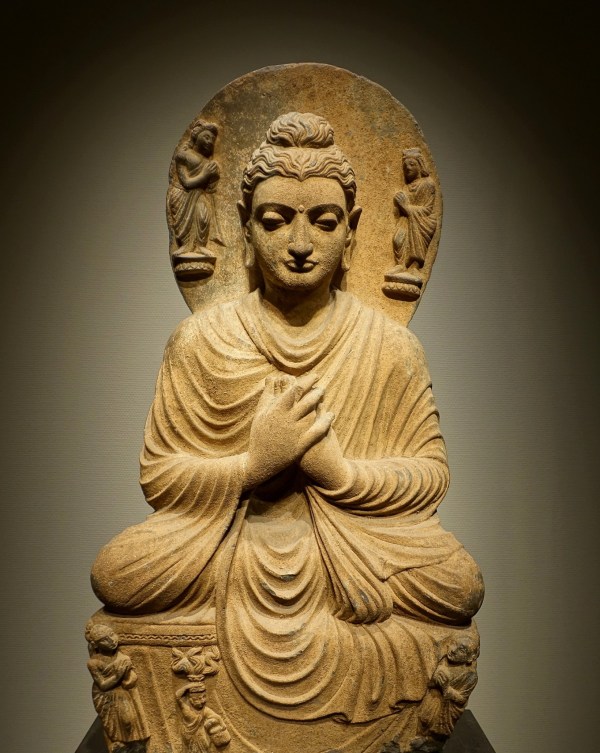
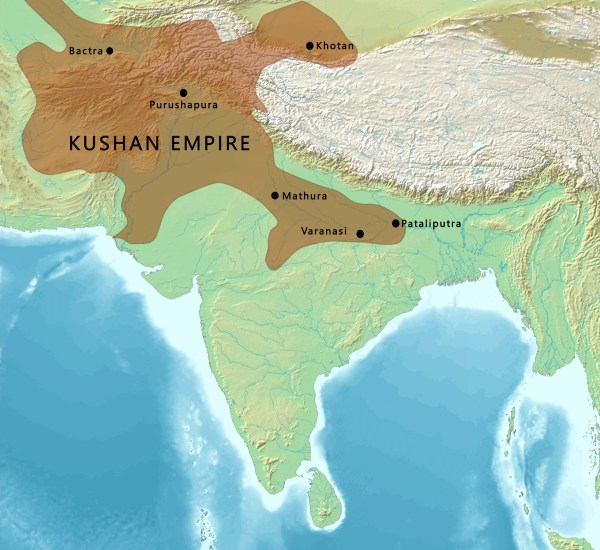
Art in the Kushan Empire How can ancient empires help students understand the power of cultural exchange and creativity? The art of the Kushan Empire provides a perfect example. By blending Greek realism, Persian motifs, Central Asian sensibilities, and Indian spirituality, Kushan artists created a distinctive, hybrid style that illustrates how cultures borrow, adapt, and innovate.
-

Origins and Rise The multicultural world we find ourselves living in today provides us with both strengths as well as challenges, but the process has unfolded many times before. What can it teach us? Let’s take a look at the Kushan Empire. The empire emerged in the 1st century CE when the nomadic Yuezhi tribes migrated
-
Cosmopolitan cities are nothing new, nor are they confined to any one area. The city of Ai Khanum was no different. Tucked away along the Oxus River, on the edge of the Hindu Kush and Pamir mountain ranges, in what is now northern Afghanistan, Ai Khanum was once one of the most surprising cities of
-
Why do some conquests bring about lasting change, while others seem to fade from memory? Of all the foreign powers that Bactra came under the dominion of, none changed them as much as the Muslim conquest. When the Umayyad Caliphate came to power in the 7th century AD, sweeping changes reverberated throughout the land. As
-
Long before American or even western popular culture spread around the globe, Bactia was home to the fusion of new ideas and artistic endeavors. We as educators can use this region to explore the complex role shifting identities and ideas played and evaluate the effects it had, and continues to have, on our world today.
-
There’s a place beyond the sandy deserts, partially enclosed by mountains, where sits the crossroads of cultures that stretches back thousands of years. A place known for its stunning beauty, rich pottery, and vibrant textiles. A place most westerners have never heard of. This crossroad of civilizations is increasingly opening its doors to the outside
-
Music might be the most overlooked teaching tool in our field. We assign documents and speeches, but what about the songs students are already streaming? A three-minute track can open a historical doorway in ways a dense essay sometimes can’t. Take protest music. Bob Dylan, Public Enemy, Childish Gambino—different eras, same power. Students hear anger,
-
I’ve lost count of how many times a student has asked, “Can we just watch the movie?” I get it—films bring history to life in a way that textbooks can’t. But movies are tricky. They compress timelines, merge characters, and sometimes invent whole events. Still, I don’t avoid them. Instead, I frame them. Before we
-
For too many people, history was taught with straight-up textbooks, primary sources, and maybe a documentary or two. I knew my students were already learning history—through movies, music, and even memes. The catch? They weren’t always learning it accurately. The problem was how to help my students realize history was far more interesting than reading
-
A good history lesson is like a stage play. The lighting, the actors, the set—it all works together to draw the audience in. But behind every great performance? Summer rehearsals. Summer is when I plan my first few “acts” of the year. I always ask: What will hook them? Maybe it’s a simulation, a mystery