Long before American or even western popular culture spread around the globe, Bactia was home to the fusion of new ideas and artistic endeavors. We as educators can use this region to explore the complex role shifting identities and ideas played and evaluate the effects it had, and continues to have, on our world today.
After the dust had settled from the clouds of war, Alexander the Great had succeeded in subduing some of the fiercest resistance he ever encountered. Bactria, sitting on the edge of the former Achaemenid Empire, had seen the first Greeks arriving as early at the 5th century BC. While Alexander’s untimely death led to the ultimate fragmentation of his kingdom, the region continued under Greek rule for over a century.
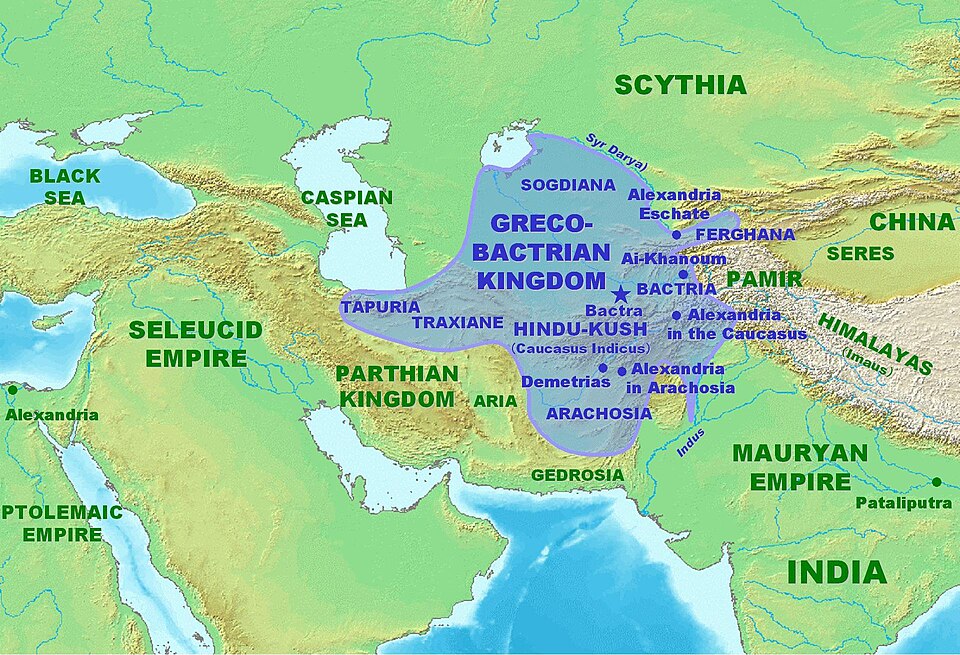
His successor kingdom, the Seleucid Empire, saw cities like Ai Khanoum blend Greek and local culture. This fortress city served as an outpost of Greek culture thousands of miles to the east. The capital, Bactra (modern Balkh), featured a large citadel and an amphitheater. The next several centuries continued to increase the prosperity of the region as Bactria linked India and China in the east with Persia and the Mediterranean to the west.
With trade came new ideas and inventions. The region became a hub of Buddhism, and the major cities of Bactra were home to Zoroastrians, Manicheans, and Hindus as well. In fact, it was the Greek influence that began what scholars refer to as Greco-Buddhist, or Gandhara, art. This period is most notably marked by the shift from symbols to idealized realism of the Buddha.
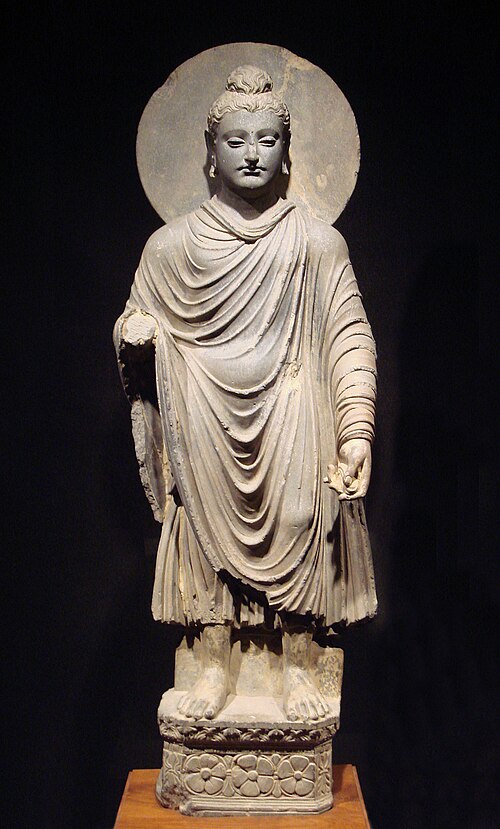
Following the region’s conquest by the Mauryan Empire, its third king, Ashoka the Great, noted his conversion of the Greeks of the region to Buddhism.
“Here in the king’s domain among the Yavanas (Greeks), the Kambojas, the Nabhakas, the Nabhapamkits, the Bhojas, the Pitinikas, the Andhras and the Palidas, everywhere people are following Beloved-of-the-Gods’ instructions in Dharma.” ~ Ashoka, Rock Edict 13 (3rd century BC).
The later rise of the Kushan Empire in the 1st century AD continued the region’s urban and artistic legacy. In addition, Buddhism continued to spread eastward. As the region came under Turkic and Persian spheres, the Greek influence faded, but its artistic and trade traditions endured. Despite the ebb and flow of empires, the Bactrians managed to maintain their cultural and ethnic identity. By the eve of the Muslim conquest in the 7th century, Bactra had served as a cultural fusion of commodities and ideas.
Happy teaching,
Ryan Wagoner
The Lyceum of History
“I am indebted to my father for living, but to my teacher for living well.” — Alexander the Great
Follow me on: TpT | YouTube | Blog | X | Facebook



 Lyceum of History
Leave a comment