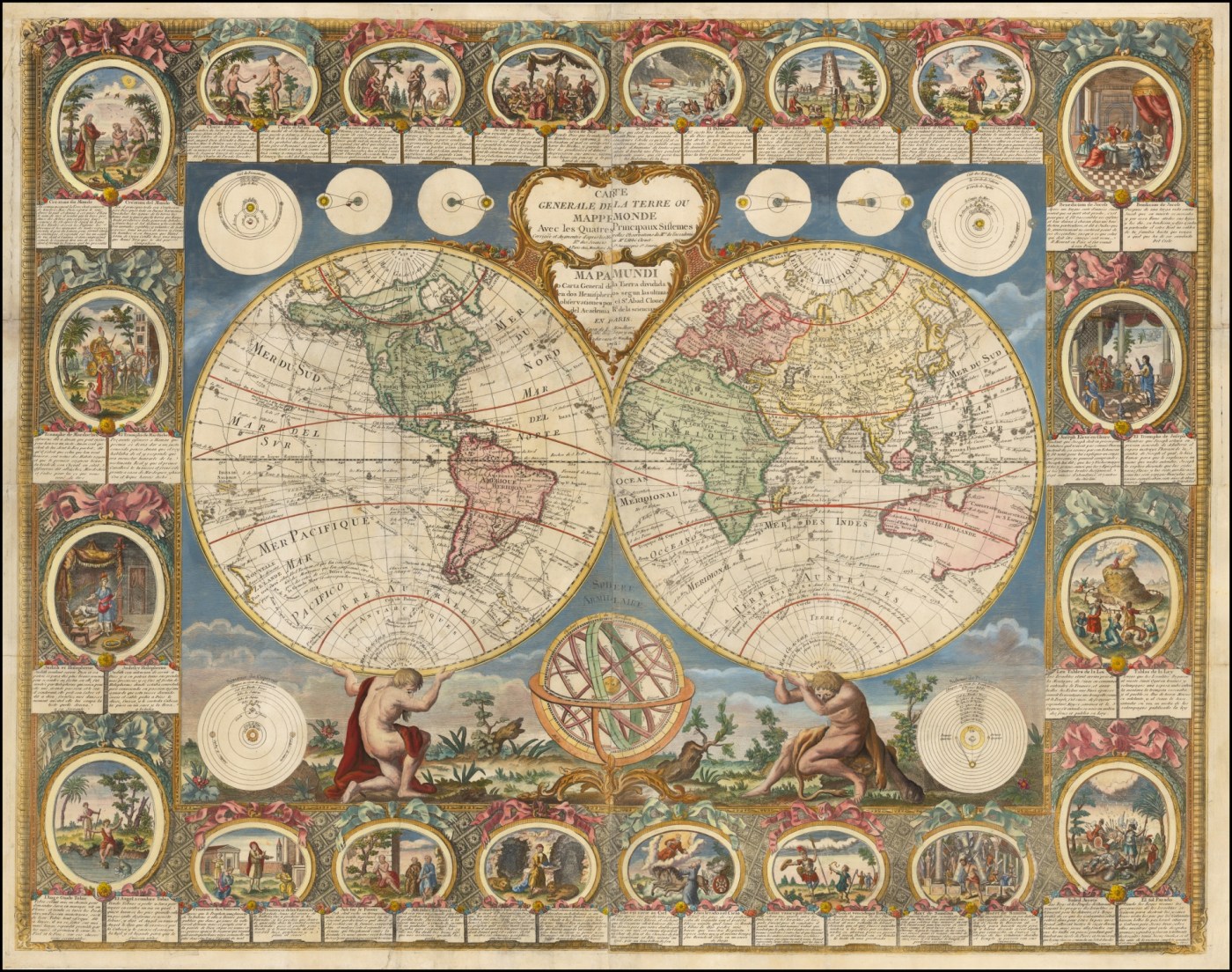
I can remember being a middle school student sitting in a social studies class looking at whatever map(s) went with the topic of the day. I was always fascinated with them. I know, I was weird. But seriously, exploring the world around me always piqued my interest. Even today, I still enjoy a good map. Sitting on my deck with my dogs, it hit me. I need to find new ways to get my students to develop the same curiosity I’ve always had.
At the time, I was stuck in a rut on what type of resource to create next. For some reason the word hyperlink came to me. I quickly hopped online to look for a quality map that I could use to get started. This was back when that TikTok trend about how often men think about the Roman Empire was big. There was my map.
I must’ve spent hours, although it didn’t seem like it, working in Google Slides. I decided that a Roman trade map would be the way to start. Like a child who gets a new present, I was so excited to add an image of a Roman coin that would be hyperlinked to different regions of the Roman Empire. Students would be able to learn about the different regions as well as the commodities they produced.
My goal in all of this was to make a map come alive. No longer was it just a static image; now it was an interactive tool that you could click on to delve deeper into the contents of the map and, hopefully, satisfy your curiosity. I’ve long since finished the first map, but I still get excited when I begin working on a new one. It’s my goal that others are able to use these maps to engage students, build their curiosity about the world around them, and make the life of other teachers just a little bit easier. If you’re interested, click here for a wide collection of interactive maps designed for students.
Warm regards,
Ryan Wagoner
Lyceum of History
“I am indebted to my father for living, but to my teacher for living well.” ~Alexander the Great


 Lyceum of History
Leave a comment